Vilthermurpher
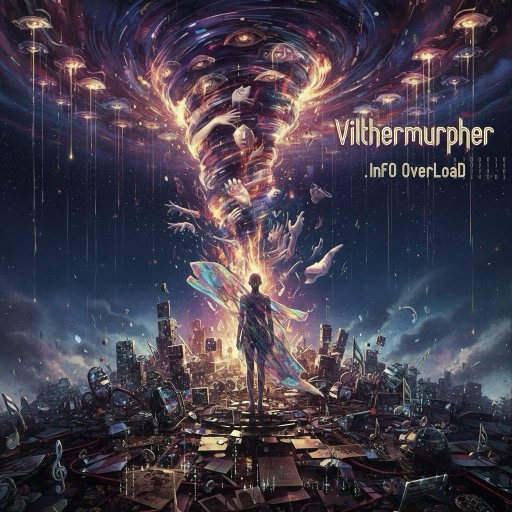








A curated selection of works from the formative period was refined into a cohesive album: Vilthermurpher. Originally conceived as an 18-track suite, the final release was streamlined to enhance sonic coherence and production fidelity. The album was officially mastered in 1997.
Vilthermurpher is not an album — it’s a psychic echo, a dream whispered through cracked speakers. It is the sound of love that never arrived, yet refuses to die. A sonic journey through the hazy, electric thrum of infatuation that flickers like a dying neon sign in a forgotten mall. This is the soundtrack to the heart that knows it’s not loved back — not yet, not ever — and still, still, reaches. Inspired by the paradox of desire: that the most intense feelings often bloom in the soil of rejection, Vilthermurpher explores the agonizing beauty of wanting someone who doesn’t see you, who doesn’t want you — and yet, you can’t stop loving them. It’s not despair. It’s not hope. It’s something in between: the delicate, unbearable tension of emotional anticipation, where every glance, every silence, every "almost" becomes a ritual. The album is a dream diary of a soul on the verge of becoming something more — not a lover, not yet — but a myth. A legend built from longing, from the way your breath catches when they walk into a room, from the way you replay their words like a spell. Vilthermurpher is not about winning. It’s not about love that comes to pass. It’s about love that almost came to pass — and in that almost, it became something greater than love. It’s for the quiet ones. The ones who memorize your posture. The ones who write poems in the margins of your text messages. The ones who, even now, still believe you’re not too late. Because sometimes, the most powerful love isn’t returned. It’s reborn.
Amber Ambient
A love letter to a single, suspended moment — a quiet evening in a university dorm room, sunlight filtering through thick, tattered drapes made of aged amber-colored fabric. The room is bathed in a golden, almost liquid glow, transforming the space into a fragile, glowing cocoon. The air feels thick with memory, and the bond between two people feels both intimate and eternal — as if time has paused, preserving them in a golden amber of quiet togetherness. The song doesn’t narrate a story — it embodies a feeling. The listener is not just hearing the room; they are in it. The walls are not walls anymore. The floorboards creak with old memories. The silence between notes is as heavy as the golden air.
Running Through a Store
A sonic sprint through a hyperreal, neon-drenched music retail store — not a real place, but a dream of one. The world is compressed, pulsing, and flickering like a glitch in the system. The protagonist is racing through aisles of vinyl, digital downloads, limited-edition CDs, and fan merch, chasing the last copy of their lover’s new album — not for music, but for meaning. They don’t just want the album. They want the moment when it was made, the moment when their lover was still reachable, still real. But time is a currency, and the sale is closing. The album is about to go out of stock — and with it, any chance to feel close to the person who made it, who once loved them. This is not a song about romance lost — it’s about romance almost made. A love that could have bloomed in the silence between tracks, in the shared experience of listening to a new song on a cracked phone speaker. But it’s too late. They’re not together. The album is sold out. And the love that might have grown from it? It’s already a memory.
Dark Walls
A song about heartbreak. It’s about erasure. It’s the moment after the last text, the final reply — the silence that isn’t peaceful. It’s the sound of a door closing in a room with no exit. The narrator has been infatuated — not with a person, but with an idea: the way their voice cracked on a voice note, the way they laughed at a joke no one else got, the way they looked at the sky and said, “I think I’m not made for this world.” That was the illusion. Now, they’re gone. Not dead. Not even angry. Just… gone. And the space they occupied — the one that once felt like home — is now just dark walls. No warmth. No echo. No trace. The infatuation was never real. The love was never returned. And now, the walls are not just physical. They’re emotional. Existential. You’re not sad. You’re unmade.
Psiwogg
A love song. It is a war chant for the heart that refuses to bleed. It is the sound of a soul forged in the fire of being loved, then discarded — not once, not twice, but so many times the pain has turned to steel. The name "Psiwogg" is not a word. It is a spirit. It is the name you give to the part of you that does not collapse when love fails. It is the entity that emerges from the ash of every "I don’t love you" — not healed, not healed yet, but hardened. It is not angry. It is not sad. It is psiwogg. And it does not stop. This is not resilience as a process. It is resilience as a state of being. A condition. A truth. You are not over it. You are become it.
Vhalar
A song about love. It is a liturgy — a desperate, trembling confession spoken into the void between mortals and gods. The narrator is not in love with a person. They are in love with Vhalar — a name not of a woman, but of a presence. She is not human. She is not even real in the way we understand reality. She is light. She is silence. She is the wind that carries no name but is felt in every breath. She is god-like — not in power, but in distance. She is not cruel. She is not kind. She simply is. And the narrator, in their madness, has fallen in love with her. Not because she sees them. But because she doesn’t. Because she is too far. Too perfect. Too unreachable. And that is why they love her. This is not a quarrel — it is a monologue. A conversation with the sky. A plea to a star that doesn’t blink back.
Nictitatious Flirt
About desire and about involuntary surrender. The narrator is not a man who fails to flirt. He cannot not flirt. His body has hijacked his social instincts—his eyelids flicker, his lips twitch, his posture shifts into a posture of romantic invitation—automatically, uncontrollably, like a reflexive nervous system spasm. The word nictitatory (referring to the involuntary blink of the eye) becomes a metaphor for an uncontrollable, biological flirtation. He is not seducing—he is flirting as a nervous system disorder. This is not charm. This is neurological betrayal. The beautiful woman is not his choice. His body is a traitor.
Stringent Code
A love algorithm. The narrator has built a perfect emotional operating system: every trait, gesture, and flaw is quantified, analyzed, and assigned a weighted value. Love is not passion—it is protocol. But the more rigorous the criteria become, the more the heart breaks—not from rejection, but from perfection itself. Because in trying to love with absolute precision, they’ve made love impossible. This is love as a mathematical proof: elegant, total, and ultimately, empty.
Sweet Insomnia
A love fever dream. The narrator is not in love. They are addicted to love. They can’t sleep. Not because they’re anxious. Because they’re thinking about you. Every second of every night, their mind is a looped reel of your voice, your smile, the way you laughed at a joke they didn’t hear. It hurts. It should hurt. But it doesn’t. It feels good. Like a wound that won’t close, but you keep touching it because it’s the only thing that makes you feel alive. This is not romantic. It’s relentless. It’s the beauty of being broken, willingly.
Infinity
Not a lament. It is not a warning. It is a quiet miracle. The narrator sees the end. They see the slow fade, the final breath, the way the light goes out. They see it all—clear, certain, unshakable. But they also see everything in between. The laughter. The hand-holding. The quiet mornings. The way your voice sounds when you’re tired. And because they know the end, they are not afraid. They are not clinging. They are not desperate. They are free. And so, they love—fully, fiercely, without fear—because they already know how it ends. And that, they realize, is the only way to truly love. This is not fatalism. It is grace.
Hot Cave
Not a declaration. It is a signal. A coded, simmering invitation—delivered in a public space, but meant for only one person. The lyrics are not for the crowd. They are for her. And only she knows what they mean. The narrator isn’t flirting with the room. They’re flirting with her—her body, her presence, her energy—like a secret frequency only she can tune into. She is not just beautiful. She is hot. Not warm. Not hot. Burning hot. Like a cave beneath the earth—dark, deep, alive with heat. And the narrator is not just attracted. They are drawn. Like a moth to a flame that only they can see. This is not a song about touching. It’s about knowing. And the knowing is electric.
Happy Go Lucky
“Happy Go Lucky” is not about connection. It’s about infection. The narrator is not in love. They are infected with happiness. And the infection is so powerful, it renders everything else meaningless—including the person they claim to love. They don’t care if the world ends. They don’t care if the other person leaves. They don’t even care if they’re loved back. Because they are already happy. So happy, in fact, that they don’t need love. They don’t need meaning. They don’t even need them. They’re not in love. They’re in joy. And joy, it turns out, is the most dangerous kind of selfishness. This is not a love song. It’s a love after love has died— and the body is still dancing.
Helios
It is a hymn. The narrator does not fall in love. They ascend into love. They see her—Helios, the name they give her not because it’s her name, but because she is the sun. Tall. Blonde. Slender. Her body is a temple. Her mind is a constellation. Her beauty is not just visual—it is intellectual, spiritual, cosmic. She is not just beautiful. She is divine. And the love that swells in the narrator’s chest is not human. It is explosive. Like a supernova. Like a soul being reborn in fire. This is not romance. This is revelation. And in her presence, the world goes quiet—because only the light matters.
Millitant Veggies
It’s about ideology. The narrator was lost in a romantic daze—so deep in love, they forgot the world. They saw only the lover. They ignored the world. They ignored the truth. And now—they’ve woken up. But not to a happy ending. To a revolution. Because the idiots have risen. And they’re not just protesting. They’re militant. And they’re not here to talk. They’re here to punish. Because the narrator, in their love daze, ate a steak. And that was a crime. Not just any crime. A capital offense. It’s about guilt. And guilt, it turns out, is served cold—on a bed of anchient rock.
Vulvamatic
It is a love ritual. A sonic prayer. The narrator does not speak to one woman. They speak to all. To the vulva that has been hidden, shamed, erased, or ignored. To the vulva that has laughed, bled, birthed, dreamed, and trembled. To the vulva that has been called “too much” or “too little” or “not enough.” This song says: You are enough. You are holy. You are not a secret. You are a universe. Not erotic. It is sacred. Not pornographic. It is prophetic. And it is sung in a language only the body knows—rhythm, pulse, breath, and the deep, quiet hum of being home.