Trancegress-OHR
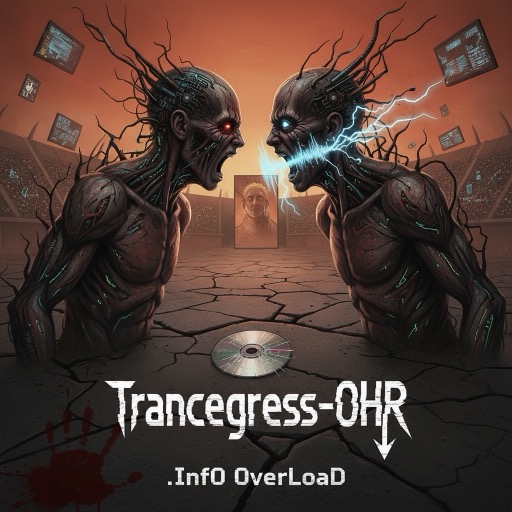








Trancegress-OHR pushes the boundaries of aggressive techno to their absolute limit, transcending conventional genre parameters and extending the sonic vocabulary of .InfO OverLoaD into a new realm of intensity and structural innovation. Serving as a logical culmination of the project’s evolutionary trajectory, Trancegress-OHR represents a definitive expansion of its artistic and technical scope—merging mechanical precision with visceral, high-velocity syncopated energy.
1. Album Title
Trancegress-OHR
The title is a neologism, a synthesized command. It is the echo of transgression within the digital architecture, a hypnotic 'trance' state that breaches limits, paired with 'OHR'—a German cipher for the ear. It demands that the listener not merely hear, but actively transgress the boundaries of perception through sound. It signifies a sonic journey that pushes the acoustic self past known thresholds.
2. Album Direction
The album push the boundaries of aggressive techno to their absolute limit, transcending conventional genre parameters and extending the sonic vocabulary of .InfO OverLoaD into a new realm of intensity and structural innovation. Serving as a logical culmination of the project’s evolutionary trajectory, Trancegress-OHR represents a definitive expansion of its artistic and technical scope—merging mechanical precision with visceral, high-velocity syncopated energy. The album handles the lifelong struggle fighting oneself with no winner ever.
This direction is the articulation of the band's fundamental belief in sound as a living architecture. The aggressive techno is the precision and reverence made manifest through visceral, high-velocity syncopated energy, transforming the struggle against oneself into a sonic crucible. The limits of the genre are the constraints of convention that must be broken, extending the infinite potential of sound generation through synthesis into a battleground for the self.
3. Band Manifesto (Contextualized)
The Stance of Resonance
"We believe that music is not merely sound arranged in time, but a living architecture of resonance, presence, and perception. Rooted in first principles, our practice begins not with style, trend, or convention—but with the fundamental truths of acoustics, the physicality of instruments, and the infinite potential of sound generation through synthesis.
We honor the instrument not as a tool, but as a partner in expression—its materials, construction, and physical behavior are sacred to our craft. We listen not only to pitch and rhythm, but to the subtleties of timbre, the evolution of texture, and the alchemy of spatial resonance. Every note is a universe of detail; every silence, a dimension of meaning.
Our process is deliberate. We reject haste. We embrace iteration not as delay, but as a necessary discipline—each refinement a step toward authenticity, not compromise. We measure progress not by speed, but by depth: by how well a sound embodies truth, how precisely it reflects intention, how fully it occupies its sonic space.
We value artistic integrity above all else. Expediency is not liberation—it is surrender. We do not chase novelty for novelty’s sake, nor do we surrender to the tyranny of the immediate. Instead, we build with patience, precision, and reverence.
This is not a style. This is a stance.
We are committed to the long view: to sound as a profound act of listening, creation, and presence.
We create not to be heard—but to be felt."
The Essay: Trancegress-OHR and the Architecture of Inner Conflict
The manifesto’s core—that music is a living architecture of resonance, presence, and perception—is the blueprint for Trancegress-OHR. This album is the forced convergence of the body and the sonic space, a definitive expansion of the project’s artistic scope where mechanical precision meets visceral energy. The lifelong struggle fighting oneself with no winner ever is not merely represented, but built from the subtleties of timbre and the alchemy of spatial resonance.
Each track in this sequence is an iteration of the conflict, a necessary discipline to reach the authenticity of self-confrontation. "How It Started" is the initial breath of this stance, the commitment to the long view of internal combat. "Push Me Once" and "I Told You" are the inevitable sonic collisions born from rejecting the tyranny of the immediate and embracing a deliberate, disciplined process. The aggressive techno is the physicality of the instruments made audible, the infinite potential of sound generation through synthesis weaponized into a high-velocity, syncopated energy. These are not songs; they are movements in a profound act of listening and creation, designed not to be heard but to be felt, embodying the uncompromising truth of perpetual internal war.
4. Tracklist
How It Started
This track is the sonic articulation of the manifesto’s first principles—the moment of inception before convention can corrupt. It is the deep, fundamental truth of acoustics made manifest. The title functions as a declaration of intent, a stark, unadorned opening statement that grounds the listener in the beginning of the Trancegress-OHR ritual. The intensity is still nascent, a low-frequency hum that promises the chaos to come. It embodies the manifesto's rejection of style, trend, or convention, presenting the raw, unpolished sonic material. It represents the initial act of listening and the realization that the lifelong struggle fighting oneself is the only authentic starting point. The music here is the physicality of sound before it is shaped, the sound that must be felt before it can be understood. It is the quiet before the visceral syncopated energy is unleashed, measuring progress by depth and the commitment to a sonic space that fully occupies its intention. It is the sound of the 'self' being constructed from silence, a dimension of meaning.
Push Me Once
The title is a warning and a trigger, the sonic equivalent of a boundary being breached. It is the point where the manifesto's commitment to precision is tested by the visceral reality of conflict. This track embodies the rejection of compromise and the embrace of iteration not as delay, but as a necessary discipline. Musically, it is the first surge of the aggressive techno—the sudden, undeniable introduction of the high-velocity syncopated energy. The drums are the percussive 'push,' an act of rhythmic defiance. It represents the self-inflicted wound, the internal adversary crossing the line and initiating the fight. The sound here must be an abrasive texture, reflecting the alchemy of spatial resonance being violently disturbed. The track functions as a slogan of internal resilience: to push is to force a definitive action, demanding a presence that is both immediate and unyielding. It is the moment when the philosophy shifts from stance to action, a direct manifestation of the struggle against the self where expediency is seen as surrender.
I Told You
This is the track of inescapable consequence, the sonic echo of prophetic self-awareness. It manifests the manifesto’s concept of depth and the precise reflection of intention. The inner voice—the true self that valued artistic integrity above all else—speaks through synthesis. It represents the cyclical nature of the internal struggle: the knowledge of the imminent fall, the refusal to heed the warning, and the subsequent crash of reality. Musically, this must be a dense, complex structure, a living architecture where the resonance is weighted with resignation and bitter truth. It is the moment of recognition, where the lifelong struggle is confirmed as inescapable. The sound is an evolution of texture, a deepening of timbre that carries the weight of repeated errors. The title functions as a prayer whispered in the ruins of a self-sabotaged action, an affirmation that the only true liberation is the commitment to the long view of patience, precision, and reverence—even in defeat. It’s the ultimate rejection of the tyranny of the immediate through the bitter wisdom of hindsight.
Awaiting Your Move
This track is the sonic manifestation of presence—a deliberate, suspended tension. It embodies the manifesto's rejection of haste and the embrace of a measured, tactical pause within the internal conflict. It is the stance made static, an act of pure concentration. The music is defined by its silences, its gaps, the dimension of meaning that lies between the notes. The aggression is internalized, held back, a coiled spring of potential energy waiting for the adversarial self to initiate. The title functions as a cold, strategic challenge, an assertion of control in the midst of chaos. It signifies the self observing the opponent (which is also the self) with the precision demanded by the craft. This is not passive waiting; it is a profound act of listening, both to the external acoustic truths and the internal psychic landscape. The track’s rhythm, though subdued, maintains a relentless, syncopated pulse—the nervous system of the self preparing for close combat. This iteration is the discipline of stillness before the next inevitable surge.
Fists In Slowmotion
This is the hyper-detailed analysis of the conflict, embodying the manifesto’s commitment to reverence for the physicality of instruments and the universe of detail in Every note. The aggression is slowed down, not to reduce intensity, but to magnify its brutality, allowing the listener to perceive the subtleties of timbre in the percussive impact. The track represents the struggle where the self is both the attacker and the victim, observing the lifelong struggle with clinical, dispassionate attention. The sound is an expansion of time, where high-velocity energy is stretched to reveal the structural innovation. The title functions as a visual motto for the internal fighting—the deliberate action that rejects expediency. The process is iteration towards a deep, uncompromising truth: the violence of self-destruction is beautiful in its slow, unavoidable mechanics. This is where the synthesis is pushed to its limit to expose the complex architecture of resonance within a single, prolonged beat, revealing how fully the sound occupies its sonic space of conflict.
Lick Your Wounds
This track is the sonic aftermath, the moment of temporary retreat and necessary accounting. It embodies the manifesto's focus on artistic integrity over compromise, where the self-inflicted wounds must be acknowledged before the cycle begins anew. It represents a brief, agonizing pause in the lifelong struggle fighting oneself with no winner ever. The music must shift from the intense syncopation to a textural, evolving soundscape, allowing the alchemy of spatial resonance to manifest the quiet, persistent ache of injury. The title functions as a ritualistic instruction—a necessary discipline of self-care intertwined with the bitter truth of temporary defeat. It is the sound of listening to the body, the instrument, and the physical behavior of its material under duress. This iteration is the deliberate process of gathering strength, a measured progress achieved not by speed, but by the depth of recovery. The silence in this track is not a mere pause, but a dimension of meaning, the deep breath before Here We Go Again.
Here We Go Again
This is the track of inevitability, the definitive statement on the cyclical nature of the internal conflict. It embodies the manifesto's concept of the long view and the commitment to creation as a profound act of presence, even if that presence is perpetual struggle. The title functions as a resigned, yet determined slogan—the acceptance of the no winner ever condition. The music is a return to the full force of aggressive techno, immediately reintroducing the high-velocity syncopated energy, but with a deeper, more refined structural complexity than "Push Me Once." It is the moment where the first principles of acoustics are used to build a living architecture of relentless repetition. The texture of the sound here must be relentless, a perfect reflection of the self surrendering not to expediency, but to the truth of its own recurring combat. This iteration is the definitive proof that the struggle is the stance, and the rejection of the tyranny of the immediate is found in the willingness to face the mirror one more time.
Hunting You Down
This track is the pure sonic manifestation of the internal pursuit, embodying the manifesto's focus on precision and the uncompromising truth of self-confrontation. It is the self actively chasing the shadow, the internal adversary. The music must be an extended, complex rhythm pattern, a sonic tracker where every beat and high-frequency element is a measured, deliberate step. The intensity here is not just velocity, but focus. The title functions as a declaration of absolute, focused will, the ultimate commitment to the long view of the struggle. It represents the self-imposed pressure to reach a depth of understanding. The sound is a masterful use of synthesis, demonstrating the infinite potential to create an atmosphere of relentless, cold, mechanical pursuit. This is not about winning; it is about the precision of the search, the necessary discipline of the chase. The track is the sound of intention fully occupying its sonic space of pursuit.
Close Combat
This is the track of the absolute, visceral peak—the collision point of the lifelong struggle. It embodies the manifesto's demand for the physicality of instruments and the merging of mechanical precision with visceral energy. The music is a chaotic, compressed wall of sound, the final expansion of the artistic and technical scope. The title functions as the tactical term for the total immersion into the sonic battle. It is the rejection of the tyranny of the immediate through sheer sonic density, demanding a depth of engagement from the listener. The sound is the pure release of the aggression, where the alchemy of spatial resonance is warped and distorted by the proximity of the fight. Every note is a universe of detail, yet the whole is an overwhelming force. The struggle is at its most immediate and uncompromised, proving that this is a stance, a commitment to authenticity even in the most destructive internal moments.
Faux Victory
This track is the cruel, immediate aftermath of "Close Combat," the sonic manifestation of the no winner ever condition. It embodies the manifesto's rejection of expediency as liberation, revealing that what appears to be a solution is merely a temporary illusion. The music must be a sudden, deceptive release of tension, a moment of harmonic major-key false hope that quickly decays back into a dissonant, textural soundscape. The title functions as a conceptual warning—the acknowledgment that artistic integrity forbids the simplistic conclusion of success. This is a profound act of listening to the internal self, recognizing the trick of the ego. The sound is a universe of detail in the decay, the beautiful, yet agonizing evolution of texture that characterizes a temporary high giving way to the inevitable resumption of the struggle. It is the sound of a momentary surrender that is not compromise, but the setup for the final, ultimate truth.
How It's Really Going
The album’s conclusion is not a resolution, but a stark, uncompromising final statement on the nature of the stance. It embodies the manifesto's ultimate commitment to the long view—the realization that the Trancegress-OHR is the unending state. The music is a disciplined, resonant echo of the entire journey, summarizing the precision and reverence with a sound that is both exhaustive and exhausting. The title functions as the final, unvarnished truth, the refusal to sugarcoat the lifelong struggle fighting oneself with no winner ever. The sound here must be defined by its depth, by how fully it occupies the sonic space of persistent reality. It is the final iteration, a sound designed to be felt as the unwavering commitment to the process, the ongoing creation, the perpetual presence of the un-won war. The final sound must be a deliberate, resonant decay into a silence that is not absence, but a dimension of meaning, promising the cycle will begin again.
5. Album as a Living Artifact
Trancegress-OHR is not an album; it is a ritual object, a dense, synthesized architecture built from the fundamental truths of acoustics. To engage with it is to perform an act of sonic self-confrontation, transforming the listener into a participant in the band’s lifelong struggle fighting oneself with no winner ever. The aggressive techno is the discipline made audible, a high-velocity mirror reflecting the internal mechanics of the self.
Listening is a surrender to the manifesto’s insistence on depth over speed, forcing a rejection of the tyranny of the immediate. Through the complex, detailed texture of tracks like "Fists In Slowmotion," the listener is trained to value every note as a universe of detail, perceiving the world not through casual hearing, but through an intense, deliberate act of listening and presence. The sonic space it occupies is not external; it is the chaotic, vital space within the skull, where the alchemy of spatial resonance is used to build the battlefield of the self.
The artifact's purpose is not to destroy the world outside, but to dismantle the illusions within. It reveals a world where expediency is surrender, and true artistic integrity lies in the uncompromised, cyclical nature of conflict. By the time the resonant decay of "How It's Really Going" fades into the pregnant dimension of meaning that is the final silence, the listener is left transformed—not liberated, but fortified—committed to the long view and the perpetual, necessary discipline of the stance. The artifact remains, vibrating with the promise of the inevitable Here We Go Again.