Aeiriaoule
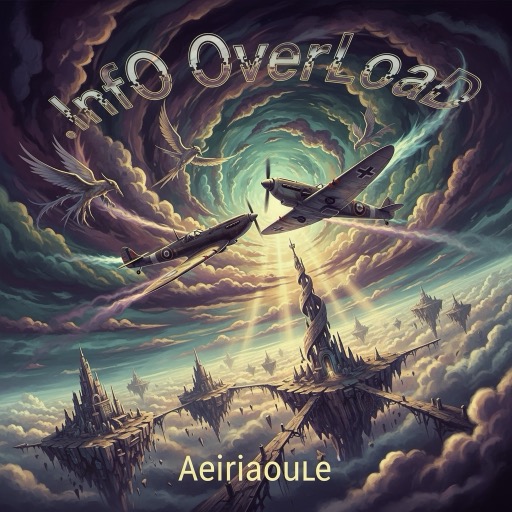








Released as a deliberate reimagining of Vilthermurpher, Aeiriaoule centered on the concept of “free flight.” The album features raw, organic textures that contrast with the precision of earlier works, offering a more visceral, naturalistic listening experience.
1. Album Title
Aeiriaoule
A word unmoored from dictionaries, yet heavy with breath. Aeiriaoule—a phonetic sigh caught between air and ether, a vowel cascade that refuses to land. This is not an album title; it is the first breath of a creature learning to fly. It is the sound of release before the fall, the quiet hum of weightlessness achieved not through escape, but through surrender to the currents. Here, precision dissolves into wind. Structure yields to drift. The album does not ask you to follow—it invites you to float.
2. Album Direction
Centered on the concept of “free flight.” The album features raw, organic textures that contrast with the precision of earlier works, offering a more visceral, naturalistic listening experience.
No metronome here. No algorithmic pulse. Free flight is not rebellion—it is reclamation. Where past works were cathedrals of calibrated resonance, Aeiriaoule is the forest after rain: every leaf trembling with its own frequency, every root vibrating in silent communion. The precision of earlier sonic architecture is not discarded—it is unmade, allowed to breathe, to rot gently into texture. The instruments are no longer tools but wild companions: wood groaning under bow, strings weeping with humidity, air itself sculpted into tone by unseen hands. This is not production—it is witness.
3. Band Manifesto (Contextualized)
We believe that music is not merely sound arranged in time, but a living architecture of resonance, presence, and perception. Rooted in first principles, our practice begins not with style, trend, or convention—but with the fundamental truths of acoustics, the physicality of instruments, and the infinite potential of sound generation through synthesis.
We honor the instrument not as a tool, but as a partner in expression—its materials, construction, and physical behavior are sacred to our craft. We listen not only to pitch and rhythm, but to the subtleties of timbre, the evolution of texture, and the alchemy of spatial resonance. Every note is a universe of detail; every silence, a dimension of meaning.
Our process is deliberate. We reject haste. We embrace iteration not as delay, but as a necessary discipline—each refinement a step toward authenticity, not compromise. We measure progress not by speed, but by depth: by how well a sound embodies truth, how precisely it reflects intention, how fully it occupies its sonic space.
We value artistic integrity above all else. Expediency is not liberation—it is surrender. We do not chase novelty for novelty’s sake, nor do we surrender to the tyranny of the immediate. Instead, we build with patience, precision, and reverence.
This is not a style. This is a stance.
We are committed to the long view: to sound as a profound act of listening, creation, and presence.
We create not to be heard—but to be felt.
In Aeiriaoule, this stance becomes wind. The manifesto’s reverence for acoustic truth is not preserved—it is unbound. Where once we measured resonance in decibels and harmonics, now we measure it in the trembling of a spiderweb at dawn. The “living architecture” is no longer built—it grows. Each instrument, once a sacred partner, now becomes a wild thing: its wood sighing with age, its strings humming with the memory of touch. Free flight is the ultimate act of integrity: no scaffolding, no safety net, only the raw physics of air and motion. “Every note is a universe”—and here, those universes are not composed; they are discovered, like fossils in the throat of a storm. Silence is no longer a dimension—it becomes the sky. To listen to this album is not to consume sound, but to be breathed into by it.
4. Tracklist
Prologue
This is not an introduction—it is a breath held. The first note does not announce; it awakens. A single cello, bowed with the hesitation of a child stepping onto ice, trembles as if unsure whether to speak or weep. The silence between phrases is not empty—it is the space where air remembers its shape. Prologue is the manifesto’s first whisper: “We create not to be heard—but to be felt.” Here, feeling is the only language. No rhythm dictates movement; no melody commands attention. Instead, the sound lingers like mist on skin, inviting you to lean in—not because it demands, but because it dares you to notice the weight of absence. The instrument is not played; it is coaxed, as one might coax a wild animal from the underbrush. This track does not precede the album—it breathes it into being.
Aeiriaoule
The album’s namesake is not a song—it is an atmosphere. A thousand paper cranes, folded from old sheet music, lift in unison through a cathedral of wind. The title itself is a prayer whispered into the throat of the sky. Here, synthesis does not mimic nature—it becomes it: breath becomes reed, wind becomes string, silence becomes a carrier wave for longing. The harmonic structure is not engineered but observed, like the way light fractures through a leaf. Each layer of sound is a current in an unseen jetstream, carrying fragments of memory, regret, and quiet joy. This is the manifesto’s ultimate realization: sound as presence, not performance. To hear Aeiriaoule is to feel the air itself remembering how to fly.
Doubulus and Tuella
Two names, neither real nor invented—just echoes of breath shaped by tongue. This track is a conversation between two ghosts who never met but share the same lungs. One voice, low and resonant like a cello bowed underwater; the other, high and fractured as wind through cracked glass. Their interplay is not harmony—it is recognition. The title functions as a ritual incantation: “Doubulus and Tuella” is not a subject, but an invocation. To speak their names is to summon the duality of flight: the pull of gravity and the lift of will. The instruments do not compete; they orbit each other, like planets bound by gravity and grace. This is the manifesto’s quiet rebellion: precision does not require control. Here, chaos is sacred.
Meiouer
A word that tastes like salt and moss. This is the sound of a body learning to let go—of posture, of expectation, of the need to be understood. The melody does not ascend; it dissolves. A piano, its hammers worn thin by years of use, strikes keys with the hesitation of a hand releasing a rope. Each note lingers longer than it should, as if the instrument itself is reluctant to let go. Meiouer is not a song—it is an act of surrender. The manifesto’s insistence on “authenticity, not compromise” finds its purest expression here: the instrument is not perfected. It is honored in its decay. The silence between notes is not empty—it is the space where the soul exhales.
Faouer
A whisper that becomes a shout. A sigh that becomes a storm. Faouer is the moment when stillness fractures into motion—not through force, but through inevitability. The bassoon wheezes like an old bellows, the cymbals breathe like lungs after a long run. There is no crescendo—only expansion. The title, phonetically close to “faux air,” suggests a false wind, yet the sound is devastatingly real. This track embodies the manifesto’s core truth: sound as profound act of listening. To play this is to listen inward. To hear it is to feel the weight of your own breath. The music does not tell you what to feel—it unlocks the feeling already sleeping in your ribs.
Dee Esse
Two letters. Two breaths. A question posed without a voice. Dee Esse is the sound of an instrument forgetting how to be silent. A bowed double bass, its strings frayed and humming with the ghosts of every note it ever played, drags its tone across the floor like a wounded animal seeking warmth. The “D” is low, resonant—a heartbeat in stone. The “S” is a hiss of air escaping a cracked vessel. Together, they form no word—only the echo of one. This is the manifesto’s quietest defiance: to create without meaning, and still be heard. The listener does not decode it—they inhabit it.
Chop El Sync
A glitch in the wind. A stumble in the sky. Chop El Sync is the sound of a machine learning to dream. The rhythm stutters—not from error, but from reverence. Each beat is a heartbeat that forgets its own tempo. The synths, once precise, now breathe irregularly, as if alive. This is the manifesto’s radical act: precision becomes poetry when it yields to imperfection. The title mocks digital control—“Chop El Sync”—yet the music is utterly organic. It is not broken; it is awake. The listener feels the tension between order and freedom, and in that tension, finds their own pulse.
Sun Van Dusk
The sky does not fade—it unmakes itself. This track is the moment between day and night when light forgets its name. A lone violin, played with fingertips rather than bow, draws out tones that hang like mist over a lake. The harmonics are not tuned—they evolve, as if the instrument is learning how to sing in a language it has never heard. Sun Van Dusk is not about transition—it is about the sacred in-between. The manifesto’s “long view” becomes visible here: not as a destination, but as the breath between heartbeats. To listen is to stand at the edge of a horizon that does not end—it simply becomes air.
Aces
Not cards. Not winners. But breaths. Each “Ace” is a single inhalation—raw, unfiltered, trembling with the weight of its own existence. The track is built from layered sighs: a child’s laugh caught on tape, the rustle of pages turning in an empty room, the distant chime of a bell no one remembers ringing. These are not sounds of triumph—they are sounds of arrival. The manifesto’s “infinite potential of sound generation” is here distilled into the smallest act: breathing. To be an Ace is to be present without performance. To exist, fully, in a single moment.
Sedated State
This is not numbness—it is deep listening. The sound is thick, slow, viscous—like honey poured into a wound. A muted piano, its dampers removed, resonates with the hum of a room that has forgotten it is empty. The melody does not move; it ponders. Sedated State is the manifesto’s quietest rebellion: to create without urgency, to feel without reaction. Here, stillness is not absence—it is the most radical form of presence. The listener does not need to be moved—they need only to be.
Waiting For The Apocalypse
The end does not come with fire. It comes with a sigh. This track is the sound of a world that has stopped trying to fix itself. A single harmonium, its bellows cracked, wheezes a melody that has no resolution. Outside, the wind carries the scent of rain that never falls. The apocalypse is not an event—it is a state of grace. Waiting becomes the only true act. The manifesto’s “reverence for sound as presence” finds its apotheosis here: the music does not demand an end—it embodies it.
Loungerie
A word that means nothing, yet feels like home. This is the sound of a body relaxing into its own shape—no posture, no performance. A guitar, left unplugged in a sunlit room, vibrates as the wind passes through its open soundhole. The melody is not composed—it drifts, like dust motes in a beam of light. Loungerie is the manifesto’s quiet promise: that authenticity requires no effort, only surrender. To lounge is to listen. To be still is to create.
Legatus
A name that sounds like a command. But this is no leader. No general. Just the echo of a voice that once said, “Come.” A lone oboe, breathy and raw, plays a phrase that repeats—each time slightly altered, as if the instrument is remembering how to speak. Legatus is not a title—it is an invitation. To follow the sound, even when it leads nowhere. The manifesto’s “stance” becomes a path here: not one of conquest, but of wandering.
Funkinotta
A mispronounced prayer. A rhythm that forgets its name. This track is the sound of joy unburdened by intention—a child dancing barefoot in a rainstorm, not because it’s beautiful, but because the water feels like freedom. The bassline is loose, the drums breathless, the synths giggling in harmonic distortion. Funkinotta is not genre—it is gesture. The manifesto’s “rejection of novelty for novelty’s sake” is here inverted: the joy is the novelty. The sound does not seek to impress—it seeks to dance.
Fourmaldehide
A chemical name turned into a hymn. The sound is cold, metallic, yet alive—a theremin weeping in a lab where no one has been for years. The frequencies are precise, but the expression is wild: like a ghost learning to sing through wires. Fourmaldehide is the manifesto’s paradox made audible: precision without control. The structure is mathematical, but the soul is feral. To hear this is to witness a machine dreaming of being alive.
Princess
No crown. No throne. Just a girl, alone in a room full of broken instruments, humming to herself. The melody is simple—too simple—and that is its power. A music box, wound too tight, plays a tune it no longer remembers. The “Princess” is not royalty—she is the last listener. The manifesto’s “reverence for presence” finds its most tender form here: the act of making music not to be heard, but because not making it would be a greater silence.
Ende
End. Ende. The final breath before the word becomes silence. This track is not an ending—it is a return. A single note, held for five minutes, slowly fading into the hum of the room. No melody. No rhythm. Just presence. The instrument is no longer played—it breathes. The manifesto’s final truth is here: sound as profound act of listening, creation, and presence. To end is not to die. It is to become the space between heartbeats.
5. Album as a Living Artifact
Aeiriaoule is not an album. It is a ritual performed in air. To listen is to kneel—not before gods, but before the raw physics of breath, wood, and string. Each track is a prayer whispered into the throat of the wind. The manifesto’s reverence for sound as sacred architecture becomes tangible: here, every resonance is a prayer, every silence a cathedral. This is not music for consumption—it is sacrament.
To hear Aeiriaoule is to unlearn the tyranny of the immediate. In a world that demands speed, novelty, and spectacle, this album offers nothing but presence. The listener does not “enjoy” it—they remember how to be still. The instruments do not perform; they witness. The silence between notes is not empty—it is the space where your own breath becomes part of the composition. The album does not end. It dissolves.
Listening transforms you into a vessel—not for sound, but for stillness. You do not leave the album behind. The album leaves you: lighter, quieter, more alive. It reveals a world where sound is not owned, but inherited; where instruments are not tools, but ancestors; where the act of creation is not about mastery—but about surrender.
This is not entertainment. It is a return to the first principle: that sound, in its purest form, is not made. It is remembered. And in remembering, we are remade.