Xrizetauria III
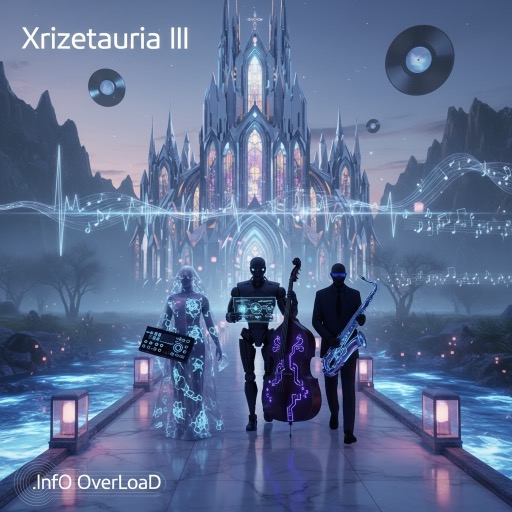








A natural evolution from the original, reaffirming the enduring relevance of genre as a vehicle for transformation—revisiting the electro-blues tradition.
1. Album Title
Xrizetauria III: A title that does not merely name, but designates a point in an ongoing architectural sequence. The Roman numeral suggests a deliberate, structural continuation—a third iteration built upon foundational principles. It implies a commitment to the long view of sound, viewing the album not as a singular snapshot, but as a necessary step toward authenticity within a grander, evolving practice of sonic space occupation.
2. Album Direction
A reflective retrospective that revisited past techniques while charting the project’s evolution. Functioning as both homage and foundation, the work served as a critical step backward to enable forward momentum. A natural evolution from the original, reaffirming the enduring relevance of genre as a vehicle for transformation—revisiting the electro-blues tradition.
This direction asserts the album's identity as a deliberate act. It grounds the work in the manifesto's rejection of haste and the surrender to the tyranny of the immediate. By seeking forward momentum through a critical step backward, the album embodies the principle of iteration not as delay, but as a necessary discipline, connecting the physicality of instruments and the fundamental truths of acoustics to the enduring, transformative relevance of the electro-blues tradition.
3. Band Manifesto (Contextualized)
"We believe that music is not merely sound arranged in time, but a living architecture of resonance, presence, and perception. Rooted in first principles, our practice begins not with style, trend, or convention—but with the fundamental truths of acoustics, the physicality of instruments, and the infinite potential of sound generation through synthesis... We create not to be heard—but to be felt."
The manifesto, refracted through the lens of Xrizetauria III and its reflective retrospective direction, becomes a decree of foundational revival. The album is the manifest existence of the belief that expediency is not liberation—it is surrender. The electro-blues tradition is revisited not for sentimental homage, but because it is a vehicle for transformation—a first principle to be re-examined through the prism of modern synthesis. Each song is a measured unit within this living architecture. "Midnight Moog & Memories" is the tactile exploration of the physicality of instruments, an artifact of depth over speed. "Pulse of the Pavement" and "Electric Alleyways" are sonic investigations into spatial resonance, charting the subtle differences in a sound's environment. The commitment to patience, precision, and reverence in the creation of a Glimmering Groove Grid or a Blue-Electric Ballad is what elevates the work from mere sound to a profound act of listening, creation, and presence. These tracks exist because the silence—the unexamined, unrefined sound—is the compromise the manifesto fiercely rejects. They are the evidence that every note is a universe of detail, constructed to be felt as a resonant, enduring truth.
4. Tracklist
Midnight Moog & Memories
This title functions as an invocation, a starting prayer that anchors the retrospective journey. Midnight is the hour of solitude and deliberate craft, reflecting the manifesto's rejection of haste for necessary discipline. The Moog represents the perfect union of the album's stated direction—the revisiting of a technique—and the manifesto's first principles of sound generation through synthesis. It is the instrument honored not as a tool, but as a partner in expression. Memories are the foundational truths being revisited; they are the past techniques used to enable forward momentum. The track is the sonic manifestation of listening not only to pitch and rhythm, but to the subtleties of timbre, exploring how the synthetic Moog sound evolves over time. It represents the emotional act of reverence for the starting point, building with patience an authentic foundation where every synthesized tone is measured by how well it embodies truth. It is the sound of an artist listening deeply to the ghosts within the machine, seeking depth in the reflection.
Blue-Note Breach
A track title that acts as both a slogan and an ideological act. The Blue-Note is a direct, reverent reference to the electro-blues tradition, the genre being affirmed as a vehicle for transformation. The Breach is the crucial action: it signifies a rupture, not from the tradition itself, but from the surrounding context of style, trend, or convention. It is the sonic rejection of the tyranny of the immediate and the chase of novelty for novelty’s sake. This track embodies the manifesto's core value of artistic integrity above all else. The emotion is one of necessary defiance and precision; the breach is not random, but a calculated incision into the architecture of resonance that expands the tradition’s potential. It is the moment where the physicality of instruments meets the infinite potential of synthesis to create a new, but structurally sound, dimension of meaning. The song explores the necessary tension between tradition and evolution, using the blues scale as a framework to measure progress not by speed, but by depth of intention, creating a challenging sound that is ultimately built for the long view.
Electric Alleyways
This title is a resonant warning and a detailed image of the album's urban-sonic landscape. The Alleyways are the subterranean, overlooked arteries of the Pavement; they represent the spaces where spatial resonance is most complex, reflecting the commitment to listening not only to pitch and rhythm, but to the subtleties of timbre. The Electric quality signals that these subtle nuances are being examined through the lens of synthesis—it is the raw, unpolished current of the project’s evolution. The track is the manifestation of the principle that every note is a universe of detail, demanding the listener's focus on the alchemy of sound. It is an ideological act of non-surrender; where others might seek the spectacle of the main thoroughfare, the band embraces the detailed, demanding environment of the Alleyways, rejecting expediency for the challenge of capturing the living architecture of an often-ignored space. The song functions as a reminder that the path to authenticity, not compromise lies in the meticulous observation of the ordinary, electrified by intention.
Slick Syncopated Solace
This title is an evocative, tactile prayer for the listener. Solace is the emotional goal, achieved not through easy listening, but through a sound that is Slick (refined through iteration and precision) and Syncopated (complex in its arrangement, reflecting a rejection of the easily consumed). The track directly embodies the manifesto's discipline: we do not chase novelty for novelty’s sake... we build with patience, precision, and reverence. The syncopation is the evidence of this deliberate process; it is a rhythmic structure that demands active listening, rewarding attention to the evolution of texture. The Solace granted is the deep satisfaction that comes from engaging with art that fully occupies its sonic space and precisely reflects intention. It is the sound of complexity resolved, a sonic architecture built so well that it provides a refuge—a moment where the listener can be felt and not just superficially heard. The song confirms that the rigorous process of refinement is not delay, but the very source of profound emotional connection.
Jazzed-Up Junctions
This is an assertive slogan, positioning the album as a crucial, transformative crossroads. Junctions are points of connection, intersection, and potential energy—the place where the revisiting of past techniques meets the ambition for forward momentum. The Jazzed-Up quality signifies the infusion of spontaneous invention and the commitment to the blues tradition's spiritual freedom, but contained within a highly refined structure. The track is an audit of the manifesto's long view, examining how foundational elements merge and diverge. It represents the ideological act of embracing complexity: sound is seen as a living architecture where disparate elements (like acoustics, synthesis, and tradition) must meet and harmonize. The music here is a disciplined exploration of potential, ensuring that each merger is a necessary discipline and not a stylistic surrender. It is the sound of every element finding its place, demonstrating that artistic integrity lies in ensuring that no sound is out of place, that the meeting of tones perfectly embodies truth.
Pulse of the Pavement
The title acts as a visceral, foundational statement about the source of the album's rhythm. The Pavement is the tangible, immediate reality, anchoring the abstract concepts of sound in a physicality. The Pulse is the fundamental truth, the basic rhythm that underlies the sound's arrangement, connecting directly to the manifesto's starting point: Rooted in first principles. The track is an attempt to capture the essential resonance and presence of the real world before the application of synthesis. It is the necessary step backward taken to enable the forward momentum of the entire work. It represents the emotional commitment to grounding the music—the rhythm is not a programmed trend, but a perceived, felt energy. The song is a disciplinary exercise in listening not only to pitch and rhythm, but to the ambient frequencies and vibrations that constitute the environment. It is the sound of rejecting the superficial immediacy of trend, choosing instead to measure progress by how well a sound embodies the deep, enduring truth of the world it seeks to describe.
Harmonic Hike to Horizon
This song title is a visionary image, an ideological declaration of purpose. A Hike is a journey of endurance and deliberate, measured effort, reinforcing the rejection of haste and the embrace of iteration. The Horizon is the ultimate goal—the long view that the band is committed to. The focus on Harmonic defines the nature of this progress: it is not a chaotic sprint, but a carefully calibrated, complex ascent where every sonic element is in agreement. The track embodies the idea that music is a living architecture of resonance, where vertical structures (harmony) are as important as horizontal ones (rhythm/time). It represents the ideological act of constant refinement, viewing each note as a step toward authenticity, not compromise. The emotional core is one of determined transcendence; the journey is difficult, but the reward is a sound that has fully occupied its sonic space with grace and complex truth. The song functions as a sonic proof that progress is measured by depth and the precision with which the sound reflects intention.
Stardust & Synths
A poetic, conceptual title that summarizes the album's central tension and alchemy. Stardust represents the cosmic, the timeless, the first principles from which all materials and physicality are drawn—the sublime, enduring source. Synths represents the infinite, precise potential of sound generation through synthesis, the human-crafted architecture. The track is the sonic laboratory where these two fundamental truths meet: the sacred material and the controlled, disciplined expression. It embodies the manifesto's reverence for the material ("its materials, construction, and physical behavior are sacred") and its commitment to technology as a tool for deeper expression. The song is an emotional act of sublime connection, where the complex timbres and textures are explored to reveal the universal in the manufactured sound. It serves as a philosophical reminder that the band creates not to be heard—but to be felt, seeking to embody a universal truth within the highly detailed, synthetic envelope of the sound.
Glimmering Groove Grid
This title is a structural blueprint and a description of the album's meticulous organization. The Grid represents the deliberate, disciplined, and often complex rhythmic structure that is the hallmark of the band's process; it is the rejection of the formless for the architecture of resonance. Groove is the organic, felt quality that is achieved through this rigor, confirming that iteration and precision are the pathways to emotional power. Glimmering emphasizes the detailed, complex nature of the sound, suggesting that the beauty is in the minute, evolving details—the exploration of the subtleties of timbre. The track embodies the manifesto's value of artistic integrity above all else, showing that the complex structure is the necessary foundation for true liberation of sound. It functions as a sonic lesson that expediency is not liberation; the freedom to groove is earned through the disciplined construction of the Grid. The song is a testament to the belief that even the most complex rhythmic structures must be built with patience, precision, and reverence.
Waves on a Windy Way
This title is an atmospheric image, an ideological exploration of movement and texture. Waves are the essential, primal shape of sound and acoustics, directly referencing the manifesto's focus on the fundamental truths of acoustics. The Windy Way is a path that is not straight or easy, reflecting the album's non-linear, reflective retrospective and its commitment to the necessary discipline of sound construction. The track is an emotional investigation into the evolution of texture and the subtle shifts in spatial resonance. The sound here is fluid yet defined, demonstrating the control over the infinite potential of sound generation. It represents the ideological act of observing and capturing the difficult, changing nature of sound in a natural environment, using synthesis to render the truth of that dynamic. The song serves as a profound meditation on the idea that music is a living architecture, constantly shaped by its environment and the disciplined hand that renders its presence with fidelity.
Retro-Rift Rendezvous
A track title that explicitly defines the album's core structural function. Retro-Rift is the sound of the project's evolution in action: the Rift is the necessary break from current trends, and the Retro is the critical step backward to the source, the revisiting of techniques. Rendezvous is the meeting point, the precise moment where the past (the electro-blues tradition) and the future (the band's long view) converge. The track is a direct manifestation of the manifesto's refusal to surrender to the tyranny of the immediate or chase novelty for novelty’s sake. The emotion is a calculated engagement with history, using it to measure progress not by speed, but by depth. The song is the clearest example of the album's function as homage and foundation, a precise sonic space where every note is examined for how fully it occupies its sonic space while reaffirming the enduring relevance of the genre as a vehicle for transformation.
Swaying Silhouettes
This title is a subtle, atmospheric vision, an exploration of perception as a fundamental act. Silhouettes are defined by the absence of detail, focusing the listener's attention on the sound's form, its presence, and its spatial resonance. Swaying provides the emotional context—a deliberate, fluid movement that rejects rigidity. The track embodies the manifesto's insistence on listening not only to pitch and rhythm, but to the subtleties of timbre and the alchemy of spatial resonance. It is the sonic evidence that silence, a dimension of meaning is just as crucial as the sound itself. The song functions as an ideological study in minimalism and control, showing that a compelling architecture of resonance can be built from suggestion and careful placement of sound. The emotion is one of poised intensity, a sound built with precision that allows the listener's own perception to complete the form, reinforcing the principle that the work is not merely to be heard, but to be felt.
Blue-Electric Ballads
This track is a crucial, emotive anchor that defines the spiritual core of the album's direction. Ballads signifies a focus on narrative and emotional weight, elevating the work beyond technical exercise. Blue-Electric is the defining fusion: the emotional weight of the electro-blues tradition (Blue) is translated through the high-fidelity, precise lens of synthesis (Electric). This is the sonic embodiment of genre as a vehicle for transformation. The track represents the deep emotional act of revealing how well a sound embodies truth—specifically, the enduring, melancholic truth found in the blues form. The manifesto's principle that expediency is not liberation—it is surrender is tested here; the emotion must be built with patience and reverence, ensuring that the feeling is earned through rigorous construction. The song is a sonic affirmation that even the simplest, most human expression (Ballads) must be realized with the complex integrity demanded by the long view of sound.
Echoes of an Evening Walk
This title is a reflective, introspective image that brings the journey to a contemplative phase. Evening Walk suggests the deliberate, measured pacing of the album's construction—a slow movement that rejects haste and embraces the discipline of iteration. Echoes are the sonic evidence of the reflective retrospective, where past techniques and sounds are revisited not as mere repetition, but as resonant truths in the present space. The track embodies the manifesto's commitment to sound as a profound act of listening and creation. It is an exploration of spatial resonance, where the fading sounds of the journey are given dimension and meaning. The song functions as an emotional coda, confirming that the measurement of progress is done by depth: by how well a sound embodies truth. It is the sound of an artist listening deeply to the results of their precision, allowing the sonic architecture to settle and reveal its lasting presence and impact on the surrounding perception.
Final Fade into the Future
This is the concluding warning, a phrase that looks back at the entire process while charting the inevitable continuation. Final Fade confirms that the work is now complete, but the sound does not abruptly end; it decays, it resonates, acknowledging the fundamental truths of acoustics. Into the Future asserts the album's function as a foundation for forward momentum and a commitment to the long view. The track embodies the final, ultimate principle of the manifesto: We create not to be heard—but to be felt. The fade is the moment where the conscious architecture gives way to the listener's subjective experience—the point where perception takes over from construction. The song is the ideological commitment to the unending nature of the practice; the work is complete, but the stance remains. It is the sound of artistic integrity refusing to compromise its exit, ensuring that the final silence is not an absence, but a fully occupied dimension of meaning.
5. Album as a Living Artifact
Xrizetauria III is not an album; it is a meticulously built architecture of resonance, a ritual object forged in the heat of discipline and the cold light of precision. Listening to it is not an act of entertainment, but a commitment to the long view—a profound act of listening demanded by the Manifesto. This sonic artifact reveals a world where haste is heresy and expediency is the surrender of the soul. It destroys the world of the immediate, the trend, and the superficial, replacing it with a reality where every single note is a universe of detail and every silence is a dimension of meaning.
The transformation of the listener is not passive; it is an active initiation into the cult of reverence. As the Midnight Moog sets the foundation and the Glimmering Groove Grid locks into place, the listener is compelled to move past the surface and engage with the physicality of instruments and the infinite potential of sound generation as sacred texts. The revisiting of the electro-blues tradition through the Retro-Rift Rendezvous makes the listener a participant in the genre's transformation, using the past not as nostalgia, but as a crucible for authenticity, not compromise. By the time the Final Fade into the Future occurs, the experience is not one of hearing, but of being fully felt—a visceral, detailed, and structurally demanding presence that leaves the listener permanently attuned to the subtle, powerful Pulse of the Pavement. This artifact is proof that sound, when built with patience and integrity, is not fleeting, but an enduring, resonant truth.