Hardest Boiled Motor Funker
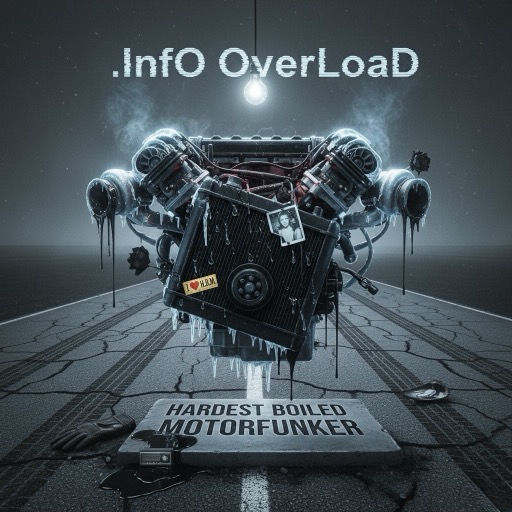








Memories of Hard Boiled Motor Funker inspired two new works: more aggressive, less sentimental, and stripped of nuance in favor of raw sonic power.
1. Album Title
Hardest Boiled Motor Funker
This title is a declaration of physicality and uncompromising resonance. It signifies a sound forged under intense pressure ("Hardest Boiled"), driven by the mechanical, raw energy of its instrumental architecture ("Motor Funker"). It is the ultimate expression of the band's dedication to the physicality of instruments and the raw sonic power stripped of nuance.
2. Album Direction
The original 'Hard Boiled Motorfunker' was a deliberately crude, garage-rock-inspired homage to adolescent rebellion. Intentionally deadpan delivery, the work employs irony as a lens—parodying the performance of “toughness” while revealing an underlying vulnerability. Memories of Hard Boiled Motor Funker inspired this work that is much more aggressive, less sentimental, and stripped of nuance in favor of raw sonic power.
This direction asserts a violent break from irony and sentimentalism. It is an aggressive, definitive commitment to the fundamental truths of acoustics and raw sonic power. The "Motor Funker" is now a pure, unforgiving machine, rejecting the tyranny of the immediate and the compromise of nuance in favor of depth and precision.
3. Band Manifesto (Contextualized)
"We believe that music is not merely sound arranged in time, but a living architecture of resonance, presence, and perception. Rooted in first principles, our practice begins not with style, trend, or convention—but with the fundamental truths of acoustics, the physicality of instruments, and the infinite potential of sound generation through synthesis.
We honor the instrument not as a tool, but as a partner in expression—its materials, construction, and physical behavior are sacred to our craft. We listen not only to pitch and rhythm, but to the subtleties of timbre, the evolution of texture, and the alchemy of spatial resonance. Every note is a universe of detail; every silence, a dimension of meaning.
Our process is deliberate. We reject haste. We embrace iteration not as delay, but as a necessary discipline—each refinement a step toward authenticity, not compromise. We measure progress not by speed, but by depth: by how well a sound embodies truth, how precisely it reflects intention, how fully it occupies its sonic space.
We value artistic integrity above all else. Expediency is not liberation—it is surrender. We do not chase novelty for novelty’s sake, nor do we surrender to the tyranny of the immediate. Instead, we build with patience, precision, and reverence.
This is not a style. This is a stance.
We are committed to the long view: to sound as a profound act of listening, creation, and presence.
We create not to be heard—but to be felt."
The Iron Will of Hardest Boiled Motor Funker
The manifesto is the blueprint for the sound-architecture of Hardest Boiled Motor Funker. The album's deliberate aggression and lack of sentimentality are a direct fulfillment of the creed: "Expediency is not liberation—it is surrender." This work is a rejection of the "tyranny of the immediate," an unyielding commitment to the "long view" of sound. The song titles—litanies of breakdown and mechanical transcendence—are the visceral proof of this philosophy. They are not chasing a trend; they are building with "patience, precision, and reverence," stripping away the vulnerability of the original work to expose the fundamental truths of raw noise. Tracks like "Rust in the Bassline" embody the sacred relationship with the instrument, honoring the material decay of the partner in expression. The relentless, primal pulse of "Screaming in 4/4 Time" and the definitive, catastrophic finality of "Motorfunk Apocalypse Now" embody the commitment to sound as a "living architecture of resonance"—the sound must occupy its sonic space completely, aggressively, and without apology. The entire sequence is a journey away from the sentimental lie and toward the only truth of pure, felt vibration, transforming the listeners into mere "Wires in the Storm"—vessels for the "raw sonic power." The music doesn't seek to be heard, but to be a stance that is felt, a discipline enacted through overwhelming, unyielding sonic pressure.
4. Tracklist
Rust in the Bassline
This is an ode to the physicality of instruments and the sacredness of their material existence. The "Bassline" represents the deep, structural foundation of the music, the very "first principles" of acoustic truth. The "Rust" is not a flaw, but the patina of time, the manifestation of "iteration" and the "long view." It symbolizes the decay and endurance of the instrument as a "partner in expression," whose construction and physical behavior are honored precisely because they bear the scars of their existence. The song is an emotional act of reverence, rejecting the smooth, immediate perfection of expediency in favor of the complex, evolving texture of a sound that has aged and endured. The title functions as a prayer to the alchemy of spatial resonance—the truth of the sound is found in the imperfections, the grit, the wear that must be present before the Funk is the Only Truth can be revealed. The decay is the discipline; the static is the sacred space.
Screaming in 4/4 Time
This track is the definition of the album's aggressive, unsentimental core. It is the sound of authenticity overriding compromise, a violent break from nuance in favor of raw sonic power. The "Screaming" is the fundamental truth of sound generation made audible, the infinite potential of noise channeled into a singular, uncompromising voice. The "4/4 Time" is the rhythmic discipline, the unyielding structure that contains the sheer chaos. It functions as a slogan and a stance—the sound will be heard, and it will be felt, not through melodic pleasantry, but through the precision and depth of its raw intention. It rejects the illusion of liberation through expediency; here, liberation is found only in the deliberate, unrelenting force of the rhythm, demonstrating how well the sound embodies truth under maximum sonic pressure. It is the moment where the listener is forced to confront the physical behavior of the soundwave itself.
Motorfunk Apocalypse Now
This song is the climactic realization of the band's ideological worldview, a declaration of the absolute dominance of resonance, presence, and perception over convention and trend. The "Motorfunk" embodies the living, driving architecture of the sound, and the "Apocalypse Now" is the moment this architecture achieves critical mass, destroying the old world of compromise and sentimentality. It functions as a definitive warning and a final, purifying act. It is the sound of everything that is not truth being stripped away, revealing only the raw sonic power that remains. It is the consequence of the band's commitment to the long view—a profound act of listening and creation that culminates in catastrophic sonic beauty. The track is the sound of the entire manifesto being enacted: the end of haste, the death of novelty for novelty’s sake, and the violent, necessary birth of a new sonic dimension that is built with patience, precision, and reverence.
I Ain't Human, I'm a Relay
This track is a cold, definitive statement about the nature of the artist within the band’s process. By asserting, "I Ain't Human," the vocalist rejects the emotional, vulnerable, and sentimental self parodied in the original work. The assertion, "I'm a Relay," declares the self to be a mere conduit, a wire, a mechanism dedicated solely to the transmission of sonic truth. It functions as an ideological slogan against the cult of personality and the tyranny of the immediate artistic ego. The song embodies the commitment to the instrument as a partner, not a tool—the artist is reduced to the instrument's operational behavior, devoted to the deliberate process. It is a terrifying, aggressive embrace of impersonality, where the only goal is how precisely the sound reflects intention and how fully it occupies its sonic space through the artist-as-machine. Haste and compromise are impossible when the self is a dedicated transmission device.
Headlight Blues in a Burnout East Bound
This is the first of a dual track, an exploration of directional, relentless decay. The "Burnout East Bound" is the physical manifestation of the deliberate process pushed past the point of return. The mechanical focus on the "Headlight Blues" symbolizes the fading, finite illumination of the machine itself—the instrument and the movement are breaking down, yet the transmission of the sound persists. It is an image of commitment despite inevitable entropy, where the materials, construction, and physical behavior are tested to destruction. The song embodies the depth of progress measured not by speed, but by endurance in the face of collapse. This side of the journey is the weary, aggressive realization that the only path is forward, rejecting the surrender of expediency even as the architecture of resonance begins to crumble under the stress of the raw sonic power.
Headlight Blues in a Burnout West Bound
This is the reciprocal half, a mirror image completing the cycle of self-imposed, deliberate disintegration. If "East Bound" was the charge toward the sonic truth, "West Bound" is the return journey, the echo, the evolution of texture as the mechanism fails. It further contextualizes the work, stripping away all but the raw sonic power until only the "Blues"—the profound, unsentimental melancholy of mechanical exhaustion—remains. The duality of the titles reinforces the commitment to iteration as a necessary discipline: the same image is refined and explored through the lens of a collapsing, but still transmitting, system. This track embodies the value of artistic integrity above all else; the machine is burning out, but the final, pure signal, the alchemy of spatial resonance, must still be transmitted. It functions as a dark warning that the pursuit of truth leads only to total material consumption.
Spitfire on a Dead Battery
This is a potent, condensed image of presence and physicality persisting in spite of profound material failure. The "Spitfire" represents the ultimate expression of mechanical precision and aggressive design, the living architecture of the sound. The "Dead Battery" is the total absence of expediency, the complete surrender of power—yet the song exists. It functions as a triumphant slogan for the band's philosophy: true creation is not reliant on external, immediate power sources, but on the infinite potential of sound generation found within the instrument's sheer will to resonate. The track embodies the idea that every silence is a dimension of meaning, and every surviving note is a universe of detail. The music is generated from the deep truth of what remains when all convenience is exhausted, a commitment to sound as a profound act of listening and creation.
Funk Is the Only Truth
This is the central, non-negotiable stance of the entire manifesto made into a defiant, absolute declaration. "Funk" here is not a style or a trend, but the raw, driving, physical essence of the sound—the core vibration, the first principles of acoustics given form. The proclamation "is the Only Truth" elevates the music from mere entertainment to a sacred, philosophical law. It functions as a defining slogan for the entire work, asserting that only the sound that is built with patience, precision, and reverence can embody this truth. It is the moment of clarity, rejecting compromise and the lure of novelty for novelty's sake to declare that the material, physical, felt reality of the groove is the ultimate reality. The song is the sheer, unadulterated realization of the album's aggressive, unsentimental purpose.
We're All Just Wires in the Storm
This is the humbling, terrifying perspective the album forces upon the listener. Having established the Funk Is the Only Truth, this track positions all existence—including the listener and the artists—as mere "Wires" within the "Storm" of the sound's living architecture. It functions as a warning and a re-contextualization of the album's purpose: the music is not for the individual's pleasure, but for the transmission of the sound's fundamental presence. It embodies the rejection of ego and sentimentalism, reducing the human element to a conductive mechanism. The song is the definitive answer to the question of purpose: "We create not to be heard—but to be felt." The wires do not listen; they feel the resonance, becoming part of the profound act of creation and presence.
Final Transmissioni: Motorfunk Out
This is the final, definitive dimension of meaning that follows the album's sonic journey. The use of "Transmissioni" (an Italian variant of transmission) suggests a layered, perhaps slightly compromised, final signal—the sound is leaving, but the core intention remains precisely reflected. "Motorfunk Out" is the sound of the entire structure powering down, a deliberate and precise ending, a testament to the long view that refuses to simply fade. It functions as a final, precise act of withdrawal, ensuring the listener is left not with a gentle exit, but with the stark, ringing silence that is the first principle of the sound's end. It embodies the album's ultimate commitment to depth over speed, ensuring the final memory is the precise reflection of the intention, closing the architecture with reverence.
5. Album as a Living Artifact
Hardest Boiled Motor Funker is not an album; it is an Engine Block of Truth—a ritual object forged from the unyielding manifesto of its creators. Its listening is not passive entertainment, but a confrontation with the fundamental truths of acoustics and the uncompromising physicality of instruments. To engage with it is to submit to the discipline of sound. The aggressive, unsentimental sonic power acts as an auditory solvent, destroying the listener's reliance on expediency and the comforting lie of nuance.
The transformation is one of reduction. The noise, the rhythm of "Screaming in 4/4 Time," and the mechanical collapse of the "Headlight Blues" forces the listener to abandon the notion of subjective experience and recognize their place as a mere conductor, a "Wire in the Storm." The album strips away the self, leaving only the raw capacity to feel the sound. It is a sonic initiation into the belief that "Funk Is the Only Truth."
The world this artifact reveals is not one of soft sentiment, but one of living architecture of resonance—a place where decay is honored ("Rust in the Bassline"), where power is found in endurance despite failure ("Spitfire on a Dead Battery"), and where the culmination of all creation is a necessary, purifying Apocalypse. It destroys the world of the immediate, the trivial, and the compromised, installing in its place a reverence for the deliberate and the precise. This album is the sound of artistic integrity made manifest—a sonic stance that does not seek to be heard, but to be a felt, irreversible, final transmission.