Vilthermurpher²
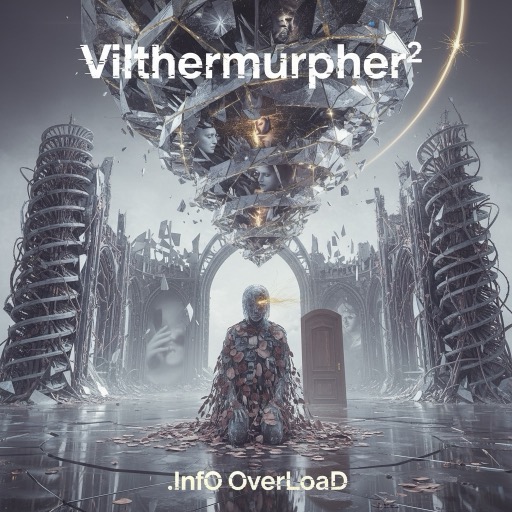








A direct sequel to Vilthermurpher exploring darker psychological landscapes. Designed as “lucid dreamscaping,” it served as a sonic bridge between Vilthermurpher and Brain Twister.
1. Album Title
Vilthermurpher²
A title that hums with the echo of its predecessor—yet twisted, doubled, irradiated. Vilthermurpher² is not a sequel in the conventional sense; it is an incision. A recursive wound opened in the psyche, where the first album’s luminous architecture now fractures under the weight of its own resonance. This is sound not as ascent, but as descent—into the quiet chambers where joy curdles into memory, and presence becomes a ghost haunting its own echo. The superscript “²” is not an increment—it is a scar, a second breath after the first was stolen.
2. Album Direction
A direct sequel to Vilthermurpher exploring darker psychological landscapes. Designed as “lucid dreamscaping,” it served as a sonic bridge between Vilthermurpher and Brain Twister.
Here, the architecture does not rise—it sinks. The same instruments that once sang with sacred clarity now whisper in half-lit corridors of the mind. Lucid dreamscaping is not about control, but surrender to the subconscious’s unedited tapestry: where joy flickers like a bulb about to die, where silence is not empty but thick, and every note carries the weight of something unsaid. This album is the threshold between clarity and collapse, where the listener becomes both architect and inmate of their own auditory hallucinations. The bridge to Brain Twister is not a path—it’s a fraying rope, trembling with every step.
3. Band Manifesto (Contextualized)
We believe that music is not merely sound arranged in time, but a living architecture of resonance, presence, and perception. Rooted in first principles, our practice begins not with style, trend, or convention—but with the fundamental truths of acoustics, the physicality of instruments, and the infinite potential of sound generation through synthesis.
We honor the instrument not as a tool, but as a partner in expression—its materials, construction, and physical behavior are sacred to our craft. We listen not only to pitch and rhythm, but to the subtleties of timbre, the evolution of texture, and the alchemy of spatial resonance. Every note is a universe of detail; every silence, a dimension of meaning.
Our process is deliberate. We reject haste. We embrace iteration not as delay, but as a necessary discipline—each refinement a step toward authenticity, not compromise. We measure progress not by speed, but by depth: by how well a sound embodies truth, how precisely it reflects intention, how fully it occupies its sonic space.
We value artistic integrity above all else. Expediency is not liberation—it is surrender. We do not chase novelty for novelty’s sake, nor do we surrender to the tyranny of the immediate. Instead, we build with patience, precision, and reverence.
This is not a style. This is a stance.
We are committed to the long view: to sound as a profound act of listening, creation, and presence.
We create not to be heard—but to be felt.
In Vilthermurpher², this manifesto becomes a requiem. The sacred instruments now tremble under the weight of psychological erosion. Each timbre is not celebrated—it is interrogated. The “alchemy of spatial resonance” becomes the hollow echo in a room where no one comes. The deliberate iteration? It is not refinement—it is the slow unraveling of a mind that refuses to let go. “Every note is a universe of detail” — and in this album, those universes are collapsing inward. The silence is not meaningful—it is haunting. We do not create to be heard, yet here, the listener feels every unspoken scream trapped in the grain of a distorted synth. The “long view” is not patience—it’s the slow descent into lucid dreaming, where even beauty becomes a trap. This is not music as art. It is music as autopsy.
4. Tracklist
Champ Erotic
This is not a song of desire—it is the sound of desire fossilizing. “Champ Erotic” is the echo of a touch that never happened, the ghost of a caress trapped in the resonance of a decaying analog oscillator. The title is a paradox: champ implies compression, pressure, the crushing of something fragile into something dense. Erotic? Not in flesh—but in memory. The song’s texture is warm, almost velvety, yet every harmonic layer reveals a subtle dissonance: the tremor of a string that’s been played too long, the breath before a sigh that never comes. It is the sound of intimacy turned inward—where affection becomes ritual, and touch becomes a question without answer. The instrument is not playing to someone—it is playing for the ghost of someone who left. The “first principles” of acoustics here become metaphors for emotional truth: the decay of a note mirrors the erosion of trust; the spatial resonance is the hollow space where love used to live. This track does not seduce—it mourns. It is the last breath of a lover’s whisper, preserved in the grain of a tape that no longer spins.
Past -> Present -> Future
This is not a timeline—it is a wound that reopens with every passing second. The arrows are not directions; they are chains. “Past -> Present -> Future” is the manifesto’s reverence for depth turned inside out: instead of building with patience, we are trapped in its debris. The past is not gone—it haunts the present like feedback in a dead room. The future? Not hope, but an echo of what was promised and never delivered. Each note is a timestamp: the decay of a piano key, the slow bleed of a synth pad into static. The “alchemy of spatial resonance” here becomes the sound of time collapsing—each moment bleeds into the next without transition, like a dream where you know you’re dreaming but cannot wake. The song does not progress—it rotates. There is no evolution, only recurrence. The instrument’s physicality? It is the body of a person who remembers too much. Every refinement, every deliberate iteration—now feels like a prison sentence. We are not creating sound. We are excavating it from the grave of our own attention.
Moments Of Joy
Joy is not here. It is the ghost in the machine—the absence that gives the sound its weight. “Moments Of Joy” is a hymn to what has vanished, rendered in trembling harmonics and brittle arpeggios that dissolve before they can be held. The title is a cruel irony: these moments are not lived—they are reconstructed, like photographs left in the sun. The instruments do not celebrate; they mourn their own capacity to recreate what is lost. Each note is a memory that refuses to fade, yet cannot be touched. The “resonance” of this track is not warm—it is transparent, like glass that remembers the shape of a hand that once held it. The silence between phrases is not empty—it is charged, thick with the weight of what was, and what will never be again. This is not music to uplift—it is a mirror held up to the listener’s own forgotten laughter, now echoing in an empty room. The manifesto speaks of “presence”—but here, presence is the most painful illusion.
Dream Theme II
This is not a theme—it is a fracture. “Dream Theme II” implies there was a first, and that the first was whole. Now, this second iteration is the dream after it has been broken open: the same melody, but warped by sleeplessness. The instruments are familiar—yet their materials have changed. A piano now sounds like bones clicking. A synth pulse mimics a heartbeat that’s slowing. The “alchemy of spatial resonance” here is the sensation of falling through layers of consciousness, each layer more fragile than the last. The theme returns—but it is no longer a melody. It is a mantra whispered by a stranger in your own mind. The “deliberate process” of the manifesto becomes here the slow, agonizing act of remembering a dream you didn’t want to have. Every iteration is not refinement—it’s deterioration. The listener does not hear a theme; they recognize it, and in that recognition, feel the horror of its familiarity. This is not music to dream to—it is music that dreams you.
Solitude: 4 Broken Hearts
The title is a mathematical equation of grief. Not “four hearts broken,” but four—each one a distinct, irreducible unit of pain. “Solitude: 4 Broken Hearts” is the manifesto’s reverence for detail made monstrous: every timbre, every harmonic overtone, carries the fingerprint of a different loss. The instruments do not play in harmony—they wail in counterpoint, each voice a different kind of silence. The “physicality of instruments” becomes the weight of absence: a cello’s bow dragging across a string that has no resonance left. The “spatial resonance” is the echo of four voices calling out into a void that answers with nothing. This track does not build—it dissolves. The listener is not invited in—they are buried under the weight of four unspoken goodbyes. The “long view” here is not patience—it’s the slow realization that solitude is not a state, but a population. And every note is a tombstone.
Wishful Dreaming
This is not aspiration—it is the sound of hope rotting. “Wishful Dreaming” is the manifesto’s reverence for intention corrupted by time. The instruments shimmer with the promise of beauty, but every note is slightly out of tune—not by accident, but by necessity. The dream is not beautiful because it’s real—it’s beautiful because it’s false. The “infinite potential of sound generation” here becomes the infinite capacity to imagine what will never be. The synth pads swell like breath held too long; the percussion is not rhythm—it’s the ticking of a clock that has forgotten what time it is. The title is a plea disguised as a genre: wishful implies desire without agency, dreaming without wakefulness. The “deliberate process” of the band becomes here a ritual of self-deception: we build these sounds not to create, but to convince ourselves that longing is enough. The silence between phrases? It’s the sound of a heart learning to stop hoping.
Hidden Sorrow
There is no hidden sorrow here. It is screaming. “Hidden Sorrow” is the manifesto’s sacred silence made audible—a scream trapped in a cathedral of reverb. The instruments are not playing; they are weeping. A lone violin bends a note until it fractures. A granular synth spills like ash from an unlit fire. The “physicality of instruments” is the trembling of a body that has stopped resisting grief. This track does not conceal sorrow—it exposes its architecture: the way it nests in overtones, how it lingers in decay, how even silence becomes a vessel for its weight. The “resonance” is not spiritual—it is pathological. Every layer of sound reveals another layer of pain, deeper than the last. The “long view” is not patience—it’s the realization that sorrow does not fade; it multiplies. The listener does not hear this song—they inhabit it, like a ghost in the walls of their own mind.
After The Hurricane
This is not aftermath—it is the voice of the aftermath. “After The Hurricane” is the manifesto’s reverence for presence made terrifying: what remains when everything has been stripped away? The instruments are not playing—they are breathing. A single piano note, sustained. A distant wind through broken glass. The “spatial resonance” is the emptiness that now has shape. This track does not rebuild—it witnesses. The “deliberate iteration” is the slow, painful act of noticing what’s left: a chair still standing. A photograph on the floor. The “first principles” of acoustics become metaphors for survival: how sound persists even when the source is gone. The silence here is not empty—it is charged with memory. This is not music to calm the mind. It is the sound of a world that has stopped screaming, and now wonders if it will ever speak again.
White Walls
This is not a room—it is a mind. “White Walls” is the manifesto’s reverence for purity turned into a prison. The walls are not clean—they are sterile. Every note is muffled, flattened, drained of timbre. The “physicality of instruments” has been erased: no grain, no breath, no imperfection. The “alchemy of spatial resonance” is the sound of a room that reflects nothing—because it has no soul. This track is the sonic equivalent of electroconvulsive therapy for the psyche: everything that was complex, textured, alive—has been erased. The “long view” here is not patience—it’s surrender. The instruments do not create—they comply. The title is a warning: white walls are where dreams go to die. To listen is to feel the slow suffocation of meaning itself.
Passionate But Cold
This is the paradox made audible. “Passionate But Cold” is the manifesto’s reverence for intention corrupted by emotional dissonance. The instruments burn with intensity—yet their heat produces no warmth. A violin screams in vibrato, but the tone is metallic. A synth pulses with urgency, yet its envelope is frozen. The “resonance” here is not emotional—it is mechanical. Passion without connection. Intention without presence. The “deliberate process” becomes a ritual of emotional self-sabotage: we build with precision, but the heart is absent. The “first principles” of sound are honored—but not the first principle of feeling. This track does not move you—it observes your movement. It is the sound of love that knows all the right notes, but has forgotten how to play them with a soul.
Close To You
This is not intimacy—it is the sound of proximity without connection. “Close To You” is the manifesto’s reverence for presence made unbearable. The instruments are near—so near you can hear their breath, the scrape of a bow, the hum of a circuit. But they do not reach you. The “spatial resonance” is claustrophobic: the sound surrounds you, yet leaves no space for your own. The “physicality of instruments” becomes the weight of someone standing too close, saying nothing. Every note is a question you cannot answer. The “deliberate iteration” here is the slow, agonizing realization that closeness does not equal belonging. The “long view” is not hope—it’s the quiet horror of being seen, and still being alone. This track does not invite you in—it traps you in the space between heartbeats.
Virulent Glide
This is the manifesto’s reverence for sound turned into a virus. “Virulent Glide” is not music—it is an infection. The title suggests smoothness, but the sound is jagged: a glide that cuts. Every note is a carrier wave for decay. The “infinite potential of sound generation” becomes the infinite capacity to corrupt. The instruments do not play—they invade. A synth glides like a blade through tissue. A bass pulse throbs with the rhythm of an abscess. The “alchemy of spatial resonance” is now the sound of a body rejecting its own architecture. This track does not build—it consumes. The “deliberate process” is the slow, meticulous spread of a silence that devours meaning. The “long view”? It’s the realization that some sounds are not meant to be heard—they are meant to erase. This is not art. It is the sound of a mind dissolving into its own echo.
5. Album as a Living Artifact
Vilthermurpher² is not an album. It is a ritual object carved from the marrow of perception. To listen is to enter a temple where every note is an incantation, and every silence—a prayer for the dead. This is not entertainment. It is exorcism. The band’s manifesto—once a hymn to sacred sound—is now its epitaph. Here, the instruments are not partners—they are witnesses. The “first principles” of acoustics have become the first truths of grief: resonance without source, timbre without touch, presence without person. Each track is a shard of consciousness left behind after the dream collapsed. To hear “Champ Erotic” is to feel the ghost of a kiss. To hear “White Walls” is to forget how color works. This album does not ask you to understand—it asks you to survive it.
Listening transforms the listener into an archaeologist of their own psyche. The sounds do not entertain—they excavate. What you find is not melody, but memory. Not rhythm, but regret. The “lucid dreamscaping” is not a technique—it’s a condition. You do not wake from this album. It wakes you. The “long view” is no longer a philosophy—it’s the only truth left: that sound, when made with reverence, does not echo. It haunts. And in the quiet after the final note fades, you will realize—you were never alone. The album was listening back. And it remembers everything.