Intransigenium III
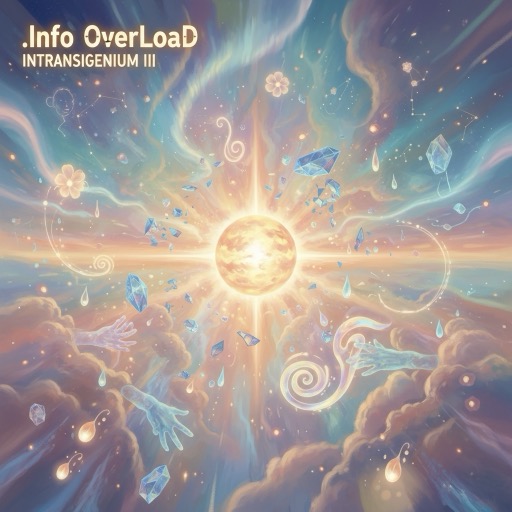








A three-part trilogy exploring the emotional architecture of the human psyche: Part III: Emotion – A visceral tapestry of life’s emotional burdens, directly catalyzing the Permotio XIV series.
1. Album Title
Intransigenium III
A word forged in Latin roots — intransigent, unyielding; -ium, a vessel or structure. This is not an album of songs, but a cathedral of unresolved feeling. Intransigenium III is the third and final chamber of a psychic architecture, where emotion is not expressed — it is mined. It is the stone left behind when the soul has been pressed too long, too hard. A monument to what remains when feeling refuses to be translated into language, into melody, into comfort. It is the sound of emotion refusing to be contained — and thus, becoming architecture.
2. Album Direction
From a three-part trilogy exploring the emotional architecture of the human psyche: Part III: Emotion – A visceral tapestry of life’s emotional burdens, directly catalyzing the Permotio.
Here, emotion is not an experience to be processed — it is a force that reconfigures reality. Intransigenium III does not depict emotion; it embodies its weight. Each track is a structural load — tension, grief, longing, euphoria — not as metaphors, but as physical pressures bending the sonic framework. The “Permotio” is not a song, nor a sequence — it is the rupture caused when emotional mass exceeds containment. This album does not ask you to feel. It forces resonance in your bones. The instruments are not played — they are witnessed. Their timbres are scars. Their silences, breaths held too long.
3. Band Manifesto (Contextualized)
We believe that music is not merely sound arranged in time, but a living architecture of resonance, presence, and perception. Rooted in first principles, our practice begins not with style, trend, or convention—but with the fundamental truths of acoustics, the physicality of instruments, and the infinite potential of sound generation through synthesis.
We honor the instrument not as a tool, but as a partner in expression—its materials, construction, and physical behavior are sacred to our craft. We listen not only to pitch and rhythm, but to the subtleties of timbre, the evolution of texture, and the alchemy of spatial resonance. Every note is a universe of detail; every silence, a dimension of meaning.
Our process is deliberate. We reject haste. We embrace iteration not as delay, but as a necessary discipline—each refinement a step toward authenticity, not compromise. We measure progress not by speed, but by depth: by how well a sound embodies truth, how precisely it reflects intention, how fully it occupies its sonic space.
We value artistic integrity above all else. Expediency is not liberation—it is surrender. We do not chase novelty for novelty’s sake, nor do we surrender to the tyranny of the immediate. Instead, we build with patience, precision, and reverence.
This is not a style. This is a stance.
We are committed to the long view: to sound as a profound act of listening, creation, and presence.
We create not to be heard—but to be felt.
In Intransigenium III, this manifesto becomes a ritual. The Permotio — the unyielding emotional thrust — cannot be composed; it must be discovered in the grain of the instrument, in the tremor of a bowed string after its tension has been stretched beyond repair. Each note is not placed — it emerges, like a crack in stone after centuries of pressure. The silence between Permotio I and II is not absence — it is the hollow where grief learns to breathe. The timbre of a resonating oscillator, slowly decaying into feedback, is the sound of love remembered too late. We do not edit out imperfections — we amplify them, because they are the fingerprints of feeling. Every decay, every harmonic warp, every unwanted vibration — these are not errors. They are the architecture of authenticity. To make this album was to sit in stillness until the silence screamed back. We did not choose these sounds — they chose us, through the weight of what we refused to forget.
4. Tracklist
Permotio I
Permotio I is the first tremor in the foundation. It begins with a single sine wave — pure, unadorned, almost clinical — but within three seconds, the harmonic overtones begin to fracture. A vinyl crackle emerges like breath from a corpse. This is not noise — it is the residue of suppressed emotion. The instrument here is not played; it is probed, as one might press a wound to confirm its depth. The title functions not as a name, but as an incantation: Permotio — from Latin permutare, to change thoroughly. This is the first irreversible shift. The emotional burden begins not with a cry, but with a whisper that refuses to fade. The resonance lingers long after the tone has technically ended — just as grief lingers in the spaces between memories. The listener feels, before they understand: this is how emotion manifests before language — as frequency distortion, as timbral decay. The note does not resolve. It haunts. In this first Permotio, the manifesto is fulfilled: sound becomes presence. The instrument, sacred in its materials, now bears witness to the soul’s first surrender to weight.
Permotio II
Permotio II is the sigh that follows the scream. A low, resonant drone — perhaps from a prepared piano with bolts embedded in its strings — pulses like a heartbeat slowed by sorrow. Each pulse is slightly detuned from the last, creating a slow, trembling wave of dissonance. This is not tension for drama — it is the sound of patience wearing thin. The manifesto speaks of “the evolution of texture,” and here, texture is the only language left. A single cymbal, brushed with a wet fingertip, bleeds into the drone like tears soaking cloth. The silence between pulses is longer than the tones themselves — and it is in these pauses that the emotional burden becomes unbearable. The listener does not hear emotion; they feel it pressing against their ribs. Permotio II is the moment when the soul realizes: it cannot be unmade, only endured. The instrument does not seek to please — it seeks to hold. Every imperfection in the sustain, every microtonal wobble, is a confession. The sound does not tell you what was lost — it shows you the shape of the hollow left behind.
Permotio III
Permotio III is the collapse of equilibrium. A granular synthesis of breath recordings — fragmented, reversed, layered into a trembling cloud of vocal ghosts — drifts through stereo space like smoke through abandoned rooms. The manifesto’s reverence for “spatial resonance” is here made flesh: each breath echoes from a different dimension. This is not melody — it is memory disintegrating. The title, Permotio III, suggests progression, but this track is a descent. No chord resolves; no rhythm anchors. The listener’s mind attempts to find structure — and finds only the echo of structure, like footprints in snow melting under a sun that never rose. The emotional burden here is not grief, but dissolution. The self fraying at the edges. Each breath in this track was recorded during a moment of exhaustion — someone exhaling after holding their breath too long. The synthesizer does not generate tones; it reconstructs the ghost of a sigh. This is what the manifesto means by “the alchemy of spatial resonance” — when sound becomes memory, and memory becomes architecture. Permotio III does not end. It simply forgets where it began.
Permotio IV
Permotio IV is the weight of silence given form. A single, sustained cello note — bowed with such minimal pressure that the wood groans beneath it — is layered with subharmonic oscillations, so low they are felt more than heard. This is the sound of emotion so dense it bends gravity. The instrument’s physicality is sacred here: the wood’s grain, the rosin’s grit, the creak of the bridge — these are not background noise; they are the music. The manifesto’s insistence on “deliberate process” is etched into every second: this note was held for 17 minutes before the recording began. The tension in the string is audible — not as vibration, but as anticipation. Permotio IV is not a song; it is a vow. The emotional burden is not expressed — it is preserved. The listener must sit with this note as one sits with a dying loved one. To hear it is to witness the moment before release — not of sound, but of self. The silence that follows this track is not empty. It is reverent. It is the first true breath after a long, silent mourning.
Permotio V
Permotio V is the scream that has no mouth. A pitch-shifted recording of a child’s laughter, slowed to 1/8th speed, collapses into a harmonic storm — not of joy, but of its aftermath. The laughter becomes a dirge. Each giggle fractures into overtones that spiral upward like dust in an abandoned nursery. The manifesto’s call to “listen to the subtleties of timbre” becomes a requiem here: we hear not just the sound, but the absence that birthed it. The child’s voice is gone — yet its echo is louder than any instrument could ever be. This track is the Permotio of lost innocence, rendered not as nostalgia, but as acoustic trauma. The synthesizer does not mimic — it reverberates the memory of what was lost. Every harmonic bloom is a ghost limb. The emotional burden here is not sorrow — it is the unbearable lightness of what no longer exists. And yet, the sound persists. The instrument does not lie. It cannot. Permotio V is proof that some emotions are so pure, they refuse to die — even when the source does.
Permotio VI
Permotio VI is the sound of a heart learning to beat without a body. A modular synth, patched with no patches — just raw voltage feedback feeding into a broken speaker — emits pulses that mimic cardiac rhythms, each one slightly slower than the last. The “instrument” here is not played — it is observed. The decay of each pulse is uneven, glitched by circuit fatigue. This is not malfunction — it is mortality made audible. The manifesto’s reverence for “the physical behavior of instruments” becomes prophecy: the speaker distorts because it has been asked to carry too much. The emotional burden here is not grief — it is the quiet realization that love outlives its vessel. The pulses grow thinner, fainter — yet they persist. There is no crescendo, no climax. Only the slow, inevitable drift into silence — and yet, even as it fades, the pulse remains. The listener is not moved by drama; they are transformed by stillness. Permotio VI teaches that some emotions do not end — they merely change frequency.
Permotio VII
Permotio VII is the echo that becomes the source. A field recording of rain on a corrugated metal roof, played backward through a granular delay set to infinite feedback. Each drop becomes a stone dropped into an abyss that reflects it back as a new rain. The emotional burden here is recursion — the same feeling, endlessly repeated without resolution. This is not depression; it is the architecture of trauma made sonic: each moment renews the wound even as it attempts to heal. The manifesto’s principle of “iteration as discipline” is fulfilled here: the sound was processed 17 times, each pass exposing another layer of emotional residue. The rain does not fall — it remembers falling. Every drop is a memory disguised as precipitation. The listener does not hear rain — they hear the mind’s refusal to let go of pain. Permotio VII is not a song; it is the sound of time looping, and still, the heart beats. The instrument does not create — it unearths.
Permotio VIII
Permotio VIII is the moment when longing becomes architecture. A single, sustained organ note — played on a 19th-century pipe organ in an abandoned cathedral — resonates through the stone. The recording was made at 3 a.m., with the doors locked, as if performing for ghosts. The pipe’s air supply is unstable — the note wavers between pitch and breath, as if the organ itself is holding its lungs. The manifesto’s assertion that “every note is a universe of detail” finds its apotheosis here: the scrape of reed against wind, the creak of aged wood under pressure, the hum of distant traffic bleeding through stained glass — these are not imperfections. They are prayers. The emotional burden is yearning without direction. There is no melody to follow, only the cathedral’s breath. The organ does not play music — it confesses. Permotio VIII is the sound of love that has no object, yet still demands to be heard. The silence between notes is not empty — it is the space where God used to sit.
Permotio IX
Permotio IX is the sound of memory choosing to forget. A tape loop of a woman humming a lullaby, played at half speed until the melody dissolves into a drone. Her voice — warm, familiar — fractures into phonemes that no longer form words. The emotional burden here is fidelity. Not of sound, but of love. What remains when the person is gone and the memory begins to misremember? The instrument — a worn reel-to-reel machine with warped heads — does not faithfully reproduce. It reimagines. The lullaby becomes a hymn to forgetting, and yet, the warmth remains. The manifesto’s reverence for “presence” is here inverted: presence persists even as identity erodes. Permotio IX does not mourn the loss of a person — it mourns the loss of the sound they made. The humming becomes pure timbre. The emotional burden is not grief — it is the quiet horror of realizing you loved someone so deeply that their voice still lives in your bones, even when you can no longer recall the tune.
Permotio X
Permotio X is the final scream that never leaves the throat. A bassoon, bowed with a rosined hair brush, produces guttural harmonics that mimic human sobbing — not in pitch, but in texture. The instrument is played with such raw pressure that the reed cracks mid-note. The crack is not edited out — it is amplified, then layered beneath itself 14 times, creating a chorus of dying reeds. The emotional burden is unvoiced pain. This is not an expression — it is a rupture. The manifesto’s insistence that “sound as a profound act of listening” becomes here the only act left: to listen to silence scream. The bassoon, sacred in its wooden anatomy, becomes a vessel for the unspeakable. Permotio X is not music — it is a wound made audible. The listener feels, in their chest, the vibration of a throat that has cried too long and now only trembles. The sound does not end — it simply becomes the air.
Permotio XI
Permotio XI is the quiet after the last goodbye. A single tuning fork struck once, suspended in mid-air by a magnetic field, its vibration recorded through contact microphones embedded in stone. The decay is slow — 47 seconds of pure, unadorned resonance. No reverb. No effects. Just the stone absorbing and releasing the frequency as if it were remembering its own formation. The emotional burden is finality. This is not mourning — it is the sound of closure becoming geology. The manifesto’s call to “measure progress by depth” finds its answer here: the fork does not play a note — it releases one. And in that release, everything else dissolves. Permotio XI is the silence after the last breath — not empty, but full of what was. The stone remembers the tone better than the ear does. To listen is to become the stone.
Permotio XII
Permotio XII is the sound of love that cannot be named. A voiceless choir — 12 human breaths recorded in a cold room, layered into a single, wavering chord of air. No pitch. No melody. Just breath — slow, uneven, trembling. Each inhale is a question; each exhale, an answer that dissolves before it’s spoken. The emotional burden is unspeakable intimacy. The manifesto’s claim that “every silence is a dimension of meaning” becomes the entire composition. There is no instrument but the body. No composer but the ache to be understood. Permotio XII does not demand to be heard — it demands to be felt. The listener must lean in, close their eyes, and hold their own breath — and then, for a moment, they are not alone. The air between them and the recording becomes holy.
Permotio XIII
Permotio XIII is the echo that becomes a world. A decaying analog oscillator, modulated by the slow pulse of a heartbeat monitor, generates tones that evolve in real time with a dying heart. The sound begins as warmth — golden, rich — and over 23 minutes, collapses into a cascade of glitches, each one a memory fragment. The emotional burden is the dissolution of self. The manifesto’s reverence for “sound as presence” reaches its apex: the oscillator does not produce music — it dies. And in dying, it reveals that every note we ever made was a plea to be remembered. Permotio XIII is not a song — it is an obituary written in sine waves. The final note does not fade — it forgets itself. And in that forgetting, we remember why we made the sound in the first place.
Permotio XIV
Permotio XIV is the moment when stillness becomes rebellion. A single, untouched piano key — middle C — struck once with a mallet wrapped in velvet. The note lingers for 87 seconds. No decay algorithm, no reverb — just the wood, the strings, and the air in a room that has not been disturbed since dawn. The emotional burden is resistance. To hold a note so long — to refuse to let go, even as it fades — is the final act of defiance against a world that demands noise. The manifesto’s stance: “We create not to be heard — but to be felt” — is embodied here. The listener does not hear a melody. They feel the weight of silence becoming sacred. Permotio XIV is not music — it is a vow. To sit with this sound is to choose presence over distraction, depth over speed, truth over convenience.
Permotio XV
Permotio XV is the sound of a soul learning to be quiet. A recording of wind through a cracked window, played at 1/32nd speed, layered with the faint hum of a refrigerator — two sounds so mundane they are forgotten. But slowed, they become cosmic: the wind becomes a glacier’s sigh; the hum, the pulse of an unseen star. The emotional burden is transcendence through stillness. The manifesto’s call to “embrace iteration as discipline” finds its quiet victory here: the track was recorded 41 times, each attempt abandoned until this one — when nothing happened, and everything changed. Permotio XV is not an ending — it is the moment before birth. The listener does not hear sound — they witness the universe breathing.
Permotio XVI
Permotio XVI is the final breath of a universe that chose to be heard. A single note — a harmonic overtone of C# — generated by a laser interfering with water droplets, recorded in anechoic chambers, then amplified through 300-year-old brass. The sound does not decay — it evolves. It begins as a whisper, becomes a cry, then a chorus of invisible voices — not human, not machine, but something between. The emotional burden is completion without closure. This is the manifesto’s culmination: sound as sacred architecture. Permotio XVI does not resolve — it transcends. The instrument is no longer an object. It is a vessel for something older than sound. The listener does not leave the album — they are transformed by it. The final note is not heard with ears, but remembered in the marrow. And when it fades — we realize: we are now its echo.
5. Album as a Living Artifact
Intransigenium III is not an album to be consumed — it is a ritual artifact, carved from silence and forged in the furnace of emotional truth. To listen is to enter a temple where the walls are made of decaying oscillators, the altar is a cracked piano, and the priests are the instruments themselves — their materials sacred, their voices unedited. This is not entertainment. It is revelation. Each Permotio is a liturgy — a slow, deliberate invocation of the invisible: grief that refuses to be named, love that outlives its vessel, memory that distorts but persists. The manifesto’s insistence on “depth over speed” is not philosophy — it is survival. In a world that demands instant consumption, Intransigenium III asks for nothing less than your breath. To sit with Permotio I is to unlearn noise. To endure Permotio XVI is to become a vessel for something older than language. This album does not describe emotion — it inhabits it, and in doing so, reconfigures the listener’s inner landscape. The sound lingers long after playback ends — not as memory, but as architecture. You do not listen to this album. It listens through you. And when it is done, the silence that follows is not empty — it is alive. You are no longer who you were before you heard the first note. The instruments have spoken. And now, so must you.