Unisfear - Hypothenar
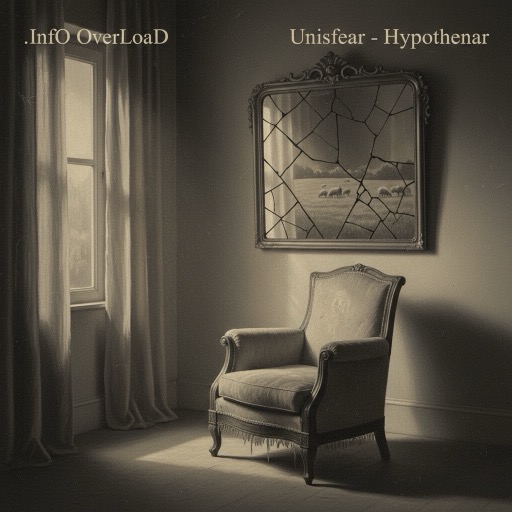








A triptych exploring the existential fear of solitude across life’s stages: Unisfear - Hypothenar – adult alienation. Returning to electronic roots with unprecedented clarity, technical limitations were overcome, and the creative process achieved a new zenith of immediacy.
1. Album Title
Unisfear - Hypothenar
The title is a bipartite cipher. "Unisfear" suggests a unified, singular dread—the existential apprehension of being alone. "Hypothenar", referencing the fleshy mound below the little finger, grounds this cosmic solitude in the body, specifically connecting it to the hand that touches, writes, and interfaces. This album, therefore, is a documentation of solitary terror experienced through the corporeal and the digital interface.
2. Album Direction
A triptych exploring the existential fear of solitude across life’s stages: "Unisfear - Hypothenar" deals with "Adult alienation." Returning to electronic roots with unprecedented clarity, technical limitations were overcome, and the creative process achieved a new zenith of immediacy.
This direction asserts the album's mission: to map the specific, mature alienation of the adult experience. The mention of "electronic roots" and "unprecedented clarity" confirms the band's devotion to the "physicality of instruments" and "precision," using synthesized sound to embody the digital, yet deeply felt, nature of this fear. The "new zenith of immediacy" challenges the manifesto's rejection of "haste," suggesting that the long-view discipline has now refined itself into instant, authentic expression.
3. Band Manifesto (Contextualized)
"We believe that music is not merely sound arranged in time, but a living architecture of resonance, presence, and perception. Rooted in first principles, our practice begins not with style, trend, or convention—but with the fundamental truths of acoustics, the physicality of instruments, and the infinite potential of sound generation through synthesis... We create not to be heard—but to be felt."
The manifesto, refocused through the lens of Unisfear - Hypothenar, becomes a terrifying, yet precise, blueprint for confronting "Adult alienation." If music is a "living architecture of resonance," then this album is the detailed, crystalline blueprint of the lonely adult psyche, built not on cheap plywood, but on "first principles" and the "physicality of instruments." This demands the existence of these songs not as catharsis, but as sonic cartography.
The "infinite potential of sound generation through synthesis" is where the digital alienation of tracks like "The Algorithm of Us" and "The Interface of Memory" find their voice; the synths are not decoration, but the cold, true sound of the mediated self. The manifesto's decree to "embrace iteration not as delay, but as a necessary discipline" becomes the painstaking, precise sonic discipline required to render the complex emotional truth of "Last Message Sent." This entire project is an act of rigorous, patient listening to the "subtleties of timbre," which here represent the subtle, yet crushing, weight of the fear of solitude. The tracks are not songs; they are resonant objects, built with "patience, precision, and reverence" to fulfill the final, sacred decree: to be felt.
4. Tracklist
Login to the Heart
This track serves as the necessary, often painful, initiation into the album’s world of digital solitude. The title functions as a command, a forced entry into the most private, protected core of the self—the "Heart"—via the cold, procedural logic of the "Login." It is the first note of Adult alienation, recognizing that even intimacy is now brokered through an interface, a credential exchange. As the manifesto stresses the "physicality of instruments" and the truth of "acoustics," this song’s sound must embody the friction between organic desire and programmed access. The acoustic reality of the body meets the synthetic rigidity of the system. The track is not merely about using a computer; it is the realization that the self has become an operating system requiring daily authentication. It represents the act of surrendering to mediation. The sonic texture is likely one of initial digital handshake—a cold click, a sterile tone—that slowly, through the manifesto's commitment to "subtleties of timbre," devolves into the deeply felt, yet isolated, pulse of the heart attempting to breach its own security protocol. The note is a tiny, perfect universe of detail: the sound of the self confirming its own fragile, temporary presence in the system. It is a warning: the path to feeling is now gated by code.
Synchronized Breath
This title is the album’s prayer—a desperate plea for rhythmic unity, a yearning for the lost physical connection that the manifesto's focus on "presence, and perception" desperately seeks to recapture. In a world of "Adult alienation," Synchronized Breath is the ghost of partnership, the memory of a shared biological reality—a rhythm opposed to the cold, metronomic beat of the algorithm. It embodies the manifesto's value of depth over speed, a moment of profound, shared resonance achieved not through external action, but through the primal, internal act of respiration. The song operates as a meditation on the "alchemy of spatial resonance," where two separate beings attempt to occupy the same sonic and physical space. The sound must reflect the difficult work of this synchronization, likely involving two complex, interwoven sonic textures—one "physicality of instruments," the other "sound generation through synthesis"—that strive for a momentary, fragile convergence. The track represents the ideological act of resisting the fragmentation of solitude by focusing on the one universal, shared truth: the involuntary pulse of life. If the manifesto values "authenticity, not compromise," this song is the most authentic, compromised moment: a beautiful, fleeting convergence of two units, inevitably destined to drift back into their solitary rhythms. It functions as a warning that perfect harmony is temporary and requires constant, deliberate effort—the very "discipline" the manifesto demands.
The Mirror in the Code
This track is the conceptual core of digital existentialism within Unisfear - Hypothenar. The "Mirror in the Code" is the sterile reflection of the self staring back from the machine, a manifestation of the manifesto's principle that "Every note is a universe of detail" and "every silence, a dimension of meaning." Here, the universe of detail is the intricate, alien logic of the software, and the dimension of meaning is the chilling realization that one's identity is now reducible to data, preference, and pattern. It is the emotional image of self-discovery warped by the digital lens. The title acts as a slogan for the band's "stance": we are committed to the long view of sound, and that sound reveals our networked, coded selves. The analysis of this track must delve into the "physicality of instruments" that create digital sound—a paradoxical space. The song is not about reflection, but replication—the soul captured and rendered by the "algorithm of us." Its sound must embody precision and technical rigor, a dense, complex structure where synthesized textures are so meticulously crafted that they take on the cold, hard weight of a physical object, representing the unyielding truth of one's digital persona. It is the ultimate confrontation with the "tyranny of the immediate," realizing that the self is immediately and perpetually present, yet entirely unmoored from the physical world.
The Algorithm of Us
"The Algorithm of Us" is the ideological act of defining adult loneliness not as personal failure, but as systemic design. It is the chilling, anti-love-song, a manifestation of the manifesto's rejection of "style, trend, or convention." This song convention: that connection is organic. Instead, it posits that all human interaction—the "Us"—is now meticulously patterned, predicted, and prescribed by the "Algorithm." The title functions as a warning: your destiny is computed, not chosen. It embodies the manifesto's value of "artistic integrity above all else," refusing to gloss over this digital determinism. The sound architecture of this track must be relentless, a complex, driving piece that uses "sound generation through synthesis" to model the tireless, self-correcting nature of the system. The song is not chaotic; it is frighteningly orderly, a precise application of the band's emphasis on "how well a sound embodies truth, how precisely it reflects intention." The intention here is the system’s: to categorize and isolate, rendering the "Hypothenar" touch obsolete. It is the sonic equivalent of witnessing the machine’s logic—a terrifying tapestry of linked, yet entirely alienated, nodes. The collective 'Us' is merely a function of code, and the music must reflect this terrifying, mechanical 'truth'.
Neural Garden
This track is the album's attempt at transcendence, a poetic image of the mind as a landscape—the "Garden"—tended by the synthetic wiring of the brain—the "Neural." It manifests the band’s commitment to "sound as a profound act of listening, creation, and presence." The garden is not a place of relaxation, but one of intense, isolated cultivation. It represents the emotional reality of Adult alienation where one must find meaning within the self, using one’s own nervous system as the environment. The track is the prayer for internal growth in the face of external sterility. Its sound is likely the most complex and evolving texture on the record, moving away from harsh, precise geometry toward organic, yet synthesized, growth. It honors the "instrument not as a tool, but as a partner," using the synthesis architecture to create a sonic environment that is both nurturing and utterly solitary. The emphasis is on "the evolution of texture," suggesting a slow, deliberate development of sound that mirrors the manifesto's rejection of "haste." It is a sonic ritual where the listener observes the self-sustaining ecology of the isolated mind. The song's rhythm might be deliberately irregular, reflecting the wild, uncontrolled nature of thought within the controlled space of the isolated mind.
Last Message Sent
This is the moment of decisive, singular action within the narrative of Unisfear - Hypothenar. The title functions as both an epitaph and a final, desperate cry. It is the emotional image of the hand on the "Hypothenar" mound poised over the send button, the final, terrifying moment before a word becomes permanent, un-retrievable data. The track manifests the manifesto’s confrontation with "the tyranny of the immediate," freezing the instant of commitment. If the band measures progress by "depth: by how well a sound embodies truth," then this sound must embody the ultimate, crushing weight of isolation, where one single message carries the entire burden of connection. The song's sonic space must be characterized by an overwhelming silence—the dimension of meaning that precedes and follows the singular, tiny sound of the message sending. The composition would likely be spare, using the "subtleties of timbre" to articulate the immense reverberation of a simple click or tone. This track is a crucial moment of surrender to the digital medium, an acknowledgment that the "long view" ends not with a grand chorus, but with the cold confirmation of a message receipt. It is a warning that every word is now a permanent artifact of a temporary moment.
The Interface of Memory
The album concludes with a terrifying retrospective, viewing the past not as an organic flow, but as a series of mediated files. "The Interface of Memory" is the ultimate expression of Adult alienation, where even one's personal history is only accessible through a mediated screen, a menu, or a search bar. It is the ideological act of recognizing that the "Hypothenar" can only touch its own past through a digital proxy. This track is where the manifesto's core tenets—"resonance, presence, and perception"—are finally shown to be fragile, dependent on the longevity of the server. The sound of this piece must be a spectral collage, a deconstruction of all previous tracks, embodying the "alchemy of spatial resonance" as fragmented echoes of past sound events appear and dissipate. The track is the most deliberate act of "iteration," reviewing the self not for refinement, but for archival. The sound is highly precise and fragmented, a demonstration of how deeply the band has listened "to the subtleties of timbre," using those minute details to represent the glitch, the corruption, and the loss of data that constitutes digital decay. It is the final, profound act of listening, realizing that presence is transient and perception is always coded.
5. Album as a Living Artifact
Unisfear - Hypothenar is not an album; it is a ritual device built with the sonic precision of a sacred machine. This body of work, born from the .InfO OverLoaD manifesto, functions as a hyper-detailed architectural rendering of the isolated self, fulfilling the dictum: "We create not to be heard—but to be felt." Listening to it is not a passive act of consumption, but a terrifying, intimate installation. The listener is not an audience, but a forced participant, led through the Unisfear by the cold, precise hand of the Hypothenar.
The album transforms the listener by stripping away the comforting illusion of effortless connection. Tracks like "Login to the Heart" and "The Interface of Memory" do not simply describe digital life; they sonic-model its constraints, turning the internal pulse into a login prompt and memory into a searchable database. This music reveals the world as a system—an Algorithm of Us—where even the most private acts, such as the Synchronized Breath or the Last Message Sent, are meticulously categorized functions. The patience and precision demanded by the manifesto infuse every track, ensuring that the fear of solitude is rendered not as vague anxiety, but as a crystalline, unavoidable truth. By demanding this level of detailed, rigorous attention, the album destroys the world of casual listening and reveals a new, terrifying world of Hyper-Aware Solitude, where existence is a continuous act of authentication within one's own Neural Garden. The listener emerges from this sonic structure less entertained, and more indexed, a fully realized node of alienation, resonating precisely with the terrifying, beautiful clarity of their own coded existence.