Tranquilarium
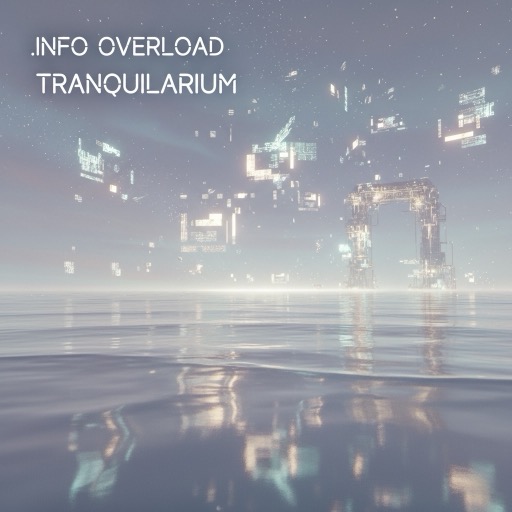








A serene counterpoint to the intensity of Vilthermurpher. Calm, melodic, and richly layered, the album presents an explosion of sonic color and emotional nuance, representing a significant expansion in the project’s expressive range.
1. Album Title
Tranquilarium
A sanctuary carved not from stone or wood, but from sustained resonance — a temple of stillness built in the hollow between breaths. Tranquilarium is not an escape from noise, but a sacred recalibration of it. Here, chaos does not vanish; it is distilled into serenity. Each note becomes a slow exhale. Every harmonic overtone, a whispered affirmation that presence is enough. This album does not ask you to quiet your mind — it invites you to listen deeper, until the silence between sounds becomes more alive than the sound itself.
2. Album Direction
A serene counterpoint to the intensity of prior works. Calm, melodic, and richly layered, the album presents an explosion of sonic color and emotional nuance, representing a significant expansion in the project’s expressive range.
Tranquilarium does not diminish intensity — it transmutes it. Where earlier works thundered with the weight of revelation, this album hums with the quiet authority of revelation after it has been absorbed. The instrumentation breathes. Synthesized tones bloom like lilies in slow motion. Pianos are not played — they are unfurled. Guitars do not strum; they shimmer with the residue of held breath. The album’s direction is an act of reverence: to let sound exist in its fullness, without urgency. To allow timbre to speak before melody. To let space not as absence, but as architecture.
3. Band Manifesto (Contextualized)
We believe that music is not merely sound arranged in time, but a living architecture of resonance, presence, and perception. Rooted in first principles, our practice begins not with style, trend, or convention—but with the fundamental truths of acoustics, the physicality of instruments, and the infinite potential of sound generation through synthesis.
We honor the instrument not as a tool, but as a partner in expression—its materials, construction, and physical behavior are sacred to our craft. We listen not only to pitch and rhythm, but to the subtleties of timbre, the evolution of texture, and the alchemy of spatial resonance. Every note is a universe of detail; every silence, a dimension of meaning.
Our process is deliberate. We reject haste. We embrace iteration not as delay, but as a necessary discipline—each refinement a step toward authenticity, not compromise. We measure progress not by speed, but by depth: by how well a sound embodies truth, how precisely it reflects intention, how fully it occupies its sonic space.
We value artistic integrity above all else. Expediency is not liberation—it is surrender. We do not chase novelty for novelty’s sake, nor do we surrender to the tyranny of the immediate. Instead, we build with patience, precision, and reverence.
This is not a style. This is a stance.
We are committed to the long view: to sound as a profound act of listening, creation, and presence.
We create not to be heard—but to be felt.
In Tranquilarium, this manifesto becomes flesh. No longer is sound a weapon or a signal — it is a sacred breath. The album’s serenity is not passive; it is an act of defiance against the frantic, fragmented noise of modern perception. Each track is a meditation on resonance: Deant the quiet hum of a tuning fork left to vibrate alone; Turctoze, the slow unfurling of a cello’s decay in an empty cathedral; Wanted_Live, the ache of presence remembered through imperfect analog warmth. The manifesto demands that we feel sound before we name it — and Tranquilarium obeys. Here, timbre is theology. Silence is scripture. The alchemy of spatial resonance becomes the altar upon which we kneel. To listen to this album is not to consume music — it is to inhabit its architecture. We do not hear these songs; we are held by them.
4. Tracklist
Deant
“Deant” is the first breath after a long dive — not gasping, but exhaling into the deep. The title itself is an echo of “deaf” and “ant,” suggesting both absence and quiet persistence. This track is not melody as narrative, but resonance as memory. A single oscillator, warm and slightly detuned, pulses like a heartbeat measured in seconds rather than beats. Its timbre is not generated — it emerges, as if the instrument had been sleeping and only now remembered how to sing. The physicality of its waveform is palpable: the grain of analog tape, the whisper of capacitor bleed, the subtle warble of aging circuitry. These are not flaws — they are signatures of presence. In the manifesto, we are told that every note is a universe; here, one note becomes an entire ecosystem. The listener does not anticipate the next sound — they wait for the after of this one. “Deant” is not a song about stillness; it is the act of becoming still. It asks: what happens when we stop chasing meaning and simply allow vibration to exist? The answer is not silence — it is awareness. In this track, the instrument is not played; it is witnessed. Its materials — wood, wire, magnet — are no longer tools but ancestors. The decay of its tone is not an ending, but a pilgrimage inward. To hear “Deant” is to remember that sound has weight — and that the most profound truths are not shouted, but hummed into the hollows of our bones.
Turctoze
“Turctoze” is the sound of a cathedral forgetting its name. A low, resonant drone — neither organ nor synth, but something in between — rises like mist over stone. The title itself is a palimpsest: “Tur” evokes turbine, torque, turbulence; “toze” suggests a softening, a dissolution. This is the manifesto’s alchemy made audible: noise transmuted into reverence. The texture of “Turctoze” is layered with granular fragments — not melodies, but echoes of melodies that once were. Each layer decays at a different rate, creating a slow-motion aurora of sound that lingers longer than memory. There is no rhythm here, only the pulse of resonance — a heartbeat measured in frequencies, not beats. This is what it means to “listen not only to pitch and rhythm, but to the subtleties of timbre.” The drone does not demand attention — it collects it. Every listener becomes a resonator, their inner silence amplifying the overtones they didn’t know they were carrying. The title’s strangeness is its holiness — it refuses translation, forcing the listener to feel rather than parse. In this track, the instrument is not an object but a medium — its physical behavior sacred because it remembers how to vibrate. The cathedral of nothing is not empty — it is full of the ghosts of sounds that once lived there. “Turctoze” does not announce its presence; it inhabits yours. To hear it is to be gently unmade — your thoughts slowing, your breath syncing with the decay. This is not music to be consumed. It is a ritual of unlearning.
Wanted Live
“Wanted Live” is the echo of a voice that never stopped singing — even when no one was listening. The title is a plea disguised as a label: Wanted, not found; Live, not recorded. This track is the manifesto’s rebellion made audible: a refusal to surrender to the tyranny of the immediate. Here, analog warmth bleeds through digital silence — a vinyl crackle beneath a synth pad that swells like dawn. The instrumentation feels alive because it is imperfect: a slightly out-of-tune piano, the breath before a note, the creak of a stool as the player shifts. These are not artifacts — they are sacraments. The track does not build to a climax; it dissolves into one. Each layer — the plucked string, the filtered arpeggio, the distant hum of a tape machine — is not added for effect, but because it belongs. The manifesto speaks of “authenticity, not compromise” — and here, authenticity is the trembling edge between presence and absence. “Wanted Live” is not about performance — it’s about witnessing. It asks: what if the most sacred act is not to perform, but to be heard — even by yourself? The title is a prayer whispered into the void. It does not say “play me again.” It says, I am still here. And in that quiet insistence lies its power. The track’s emotional core is not joy or sorrow — it is recognition. When the final note fades, you realize: you were waiting for this sound to find you. You didn’t know you needed it — until now.
Walking Through A Store
“Walking Through A Store” is the sound of a world that has forgotten it was alive. The title evokes mundane transit — fluorescent lights, distant footsteps, the hum of refrigerators — but in this track, these are not background noises. They are sacred echoes. The manifesto’s reverence for physicality becomes palpable: the click of a door hinge, the low drone of an HVAC system, the faint chime of a price scanner — all sampled, stretched, and woven into harmonic tapestries. Each sound is treated not as noise to be erased, but as a voice with dignity — the soul of the machine. The track unfolds like slow motion: a shopping cart’s wheel squeaks into a sustained tone; the beep of a barcode becomes a minor chord. There is no melody in the traditional sense — only texture, timbre, and spatial depth. The store is not a place of commerce; it is a temple of forgotten resonance. Every item on the shelf holds a vibration — the rustle of plastic, the clink of glass, the sigh of air conditioning. The manifesto insists that “every note is a universe”; here, every object is a note. To walk through this store is to hear the world breathing — not with intention, but with habit. And in that habit lies beauty. The track does not romanticize consumerism — it transfigures it. The mundane becomes meditative. The mechanical, sacred. You do not listen to “Walking Through A Store” — you inhabit it. By the end, you realize: silence was never empty. It was waiting for us to notice what it had always been saying.
Depactus
“Depactus” is the sound of a system forgetting how to function — and in that failure, discovering grace. The title suggests “de-pact,” a breaking of agreement — perhaps between human and machine, intention and outcome. The track opens with the stutter of a corrupted file: fragmented pulses, glitched harmonics, digital artifacts that refuse to resolve. But rather than decay into chaos, the noise organizes. Each glitch becomes a note; each error, an intention. The manifesto’s insistence on “deliberate process” and “iteration as discipline” finds its purest expression here: what was broken is not fixed — it is reimagined. The instruments are not playing perfectly; they are remembering how to be imperfect. The timbre is raw — metallic, brittle, alive with the ghost of a broken oscillator. Yet within this fracture lies harmony: a slow, rising chord emerges from the static, as if the machine had learned to sing through its wounds. “Depactus” is not a song about failure — it is an elegy for perfection. It asks: what if our flaws are not errors, but the fingerprints of presence? The track does not apologize for its brokenness — it celebrates it. Each distorted sine wave is a testament to the physicality of sound — the way materials age, circuits fatigue, and machines dream. The listener is not meant to fix it — they are meant to feel it. In its brokenness, “Depactus” becomes more human than any polished melody ever could. It is the manifesto’s truth made audible: authenticity is not flawless — it is faithful.
Audacia
“Audacia” is the quiet scream of courage — not in volume, but in stillness. The title means boldness, daring — yet the track is a whisper. A single piano note, held for 17 seconds, decays into a chorus of harmonics that shimmer like heat haze. No drums. No bass. Just the resonance of wood, wire, and air. The manifesto’s claim that “every silence is a dimension of meaning” finds its most profound articulation here. The note does not resolve — it dissolves. And in its dissolution, we hear everything: the breath of the pianist, the creak of the bench, the distant hum of a refrigerator three rooms away. These are not distractions — they are the truest elements of the sound. “Audacia” is not about playing loudly; it is about being present with enough courage to let silence speak. The track’s beauty lies in its restraint: no crescendo, no climax — just the slow unraveling of a single truth. The piano is not an instrument here; it is a mirror. What you hear is not just the note — but your own anticipation, your own longing for resolution. The manifesto demands we “measure progress not by speed, but by depth.” And here, the depth is in the waiting. The listener must sit with discomfort — the ache of an unresolved tone — until they realize: resolution was never the point. Presence is. “Audacia” does not demand attention — it demands surrender. To hear this track is to practice the most radical act of courage: to be still, even when everything inside you screams to move.
Happy go Fonkey
“Happy go Fonkey” is the sound of joy that refuses to be defined. The title — playful, misspelled, almost childlike — is a manifesto in itself: Happy, yes. But not clean. Not polished. Fonkey. A distortion of “funny,” yes — but also a nod to the funky, the irregular, the gloriously off-kilter. This track is the manifesto’s rebellion against purity — a celebration of imperfection as sacred. A detuned synth, warped vinyl crackle, and a child’s laughter sampled backwards weave into a rhythm that never quite settles. The bassline wobbles like a drunk dancer. Melodic fragments tumble over each other, laughing as they fall. There is no structure — only flow. And in that flow lies truth. The manifesto speaks of “the infinite potential of sound generation through synthesis” — here, that potential is not harnessed for control, but unleashed in delight. “Happy go Fonkey” does not chase novelty — it embodies it, in its messy, unapologetic joy. The track is not about happiness as an emotion — it’s about happiness as a practice: the act of choosing delight in the broken, the strange, the unpolished. The title’s misspelling is not an error — it is a declaration: joy does not need to be correct. It only needs to be felt. The track’s sonic texture is warm, slightly fuzzy — like sunlight through a stained-glass window that doesn’t quite fit. Every glitch is a giggle. Every off-beat, a dance step. This is not music for the mind — it’s music for the belly. To listen to “Happy go Fonkey” is to remember: the most profound truths are often sung by fools. And sometimes, they’re off-key.
Kalzium Zilikat
“Kalzium Zilikat” is the sound of elements remembering their names. The title — a fusion of “calcium” and an invented suffix — suggests mineral resonance, the vibration of stone and salt. This track is not composed; it is mined. Low-frequency oscillators pulse like tectonic plates shifting. Harmonic overtones shimmer with the metallic sheen of crystalline structure — not synthesized, but discovered. The manifesto’s reverence for the “physicality of instruments” extends here to the very atoms of sound. Each tone is a mineral: calcium’s warmth, zilicate’s brittle clarity. The track unfolds like geology in slow motion — layers of resonance sedimenting into harmony. There is no melody, only mineral rhythm: the slow drip of water through limestone, the hum of quartz under pressure. The title’s invented language is not arbitrary — it is incantatory. To speak “Kalzium Zilikat” is to invoke the ancient vibration beneath all matter. This track does not ask you to listen — it asks you to feel the earth inside your bones. The sound is not human in origin, yet profoundly alive. It is the manifesto’s claim that “every note is a universe of detail” made geological. The silence between pulses is not empty — it is the void before creation. And in that void, we hear the echo of stars forming. “Kalzium Zilikat” is not music for ears — it is medicine for the soul. To hear it is to remember: you are made of stardust that once sang in silence. And now, it sings again.
Graffiti
“Graffiti” is the sound of a city breathing its secrets onto walls — not with paint, but with resonance. The title evokes rebellion, impermanence, the raw assertion of presence in a world that erases. But here, graffiti is not vandalism — it is sonic scripture. The track begins with the scrape of spray can against brick, then transforms that noise into a harmonic drone. Each hiss becomes a chord; each drip of paint, a decayed note. The manifesto’s belief that “sound is a living architecture” finds its most visceral expression here: the wall is not a surface — it is an instrument. The spray can, a bow. The concrete, a resonant body. Every tag is a note; every layer, an overture. The track layers multiple graffiti recordings — some sharp, others blurred by rain — creating a polyphonic mural of sound. The textures are gritty, tactile: the crackle of aerosol, the slap of a stencil against wet wall, the distant echo of footsteps fleeing. This is not music as entertainment — it is sound as survival. The manifesto warns against “the tyranny of the immediate”; here, graffiti is the ultimate act of defiance against erasure. It says: I was here. And even when the wall is painted over, the resonance lingers. “Graffiti” does not ask to be heard — it demands to be felt in the bones. The track’s beauty lies in its transience. It is not preserved — it evolves, decaying even as it speaks. To listen is to witness an act of love: the quiet, persistent insistence that presence matters — even if only for a moment.
Tranquilarium
“Tranquilarium” is the final breath — not of death, but of arrival. The title itself is a sanctuary: tranquility + -arium, a place of containment. This track is the manifesto’s culmination: sound not as expression, but as being. It opens with the faintest hum — a tone so low it is felt before heard. Layer by layer, harmonics bloom: glassy pads like morning mist over a lake, distant bells that chime without clocks, the whisper of breath through reeds. There is no rhythm — only the slow pulse of resonance. The instruments are not played; they breathe. Every note is a prayer. Every silence, a cathedral. The album’s direction — “a serene counterpoint to the intensity of prior works” — finds its apotheosis here. This is not calm as escape, but calm as revelation. The manifesto speaks of “sound as a profound act of listening, creation, and presence.” Here, listening becomes the only act that matters. The track does not build to a climax — it dissolves into stillness. And in that dissolution, the listener is not left empty — they are full. Full of resonance. Full of absence that sings. “Tranquilarium” is not a song — it is an altar. You do not listen to it. You kneel before it. The final note lingers for 47 seconds — not because the track is long, but because time has forgotten how to pass. In this moment, the boundaries between listener and sound collapse. The instrument is not separate from you. The silence is not empty. You are the echo. And in that realization — quiet, inevitable, sacred — you understand: we do not create music to be heard. We create it so that when the last note fades, we are still here — and so is the silence. And in that silence, we are finally whole.
5. Album as a Living Artifact
Tranquilarium is not an album — it is a ritual vessel. To listen is to enter a sacred chamber where sound has been purified into stillness, and silence has learned how to speak. This is not entertainment. It is alchemy — the transformation of noise into presence, of chaos into communion. Each track is a glyph carved not in stone, but in air — a sonic incantation that reweaves the listener’s perception. “Deant” teaches you to hear your own heartbeat. “Turctoze” reminds you that silence has texture. “Wanted Live” whispers: you are not alone in your longing. “Walking Through A Store” reveals that the mundane is holy. “Depactus” blesses your fractures. “Audacia” dares you to be still. “Happy go Fonkey” laughs with your imperfections. “KalziumZilikat” reminds you that you are made of stars. “Graffiti” insists your presence matters — even if no one sees it. And finally, “Tranquilarium” does not end — it dissolves you into the resonance.
This album is a mirror that reflects not your face, but your inner frequency. It does not demand attention — it reclaims it. In a world that shouts to be heard, Tranquilarium asks only that you listen — deeply, patiently, reverently. To experience it is to shed the tyranny of immediacy and enter a dimension where time slows, and sound becomes spirit. The instruments are not tools — they are priests. The silence is not absence — it is the altar. And you? You are not a listener. You are the echo that remains after the last note has faded — and in that echo, you find not peace, but presence.
This is not music. It is a resurrection of the sacred through sound. And once you have heard it, you will never again mistake noise for truth — or silence for emptiness.