Intransigenium I
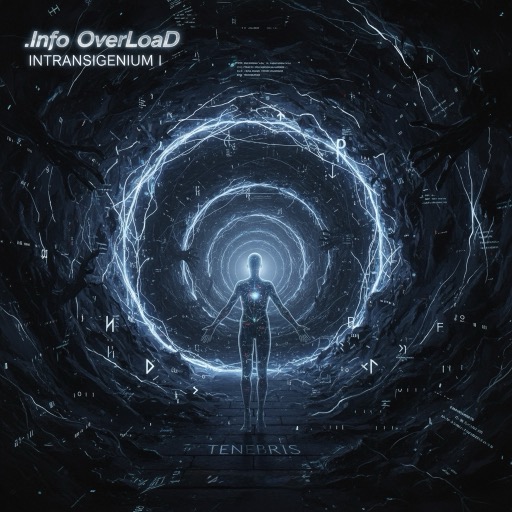








A three-part trilogy exploring the emotional architecture of the human psyche: Part I: Darkness – Music for the searching mind in voids of silence and isolation.
1. Album Title
Intransigenium I
A Latin neologism—intransigenium—born of intransigence and genium, the guiding spirit. Here, it is not stubbornness, but sacred refusal: the refusal to fill silence with noise, to surrender presence for popularity, to trade depth for immediacy. Intransigenium I is the first altar in a triptych of psychic excavation—a sonic cathedral carved from solitude, where every note is an act of defiance against the erosion of inner stillness. This is not music to distract, but to dissolve the self into its rawest echo.
2. Album Direction
From a three-part trilogy exploring the emotional architecture of the human psyche: Part I: Darkness – Music for the searching mind in voids of silence and isolation
This is not ambient. Not minimalism. Not mood. This is architectural silence—a structure built not of stone, but of absence. The darkness here is not empty; it is inhabited. It breathes. It hums with the weight of unspoken thoughts, the tremor of a heartbeat in an abandoned room. The music does not illuminate—it reveals. It does not comfort—it confronts. Each tone is a chisel against the walls of distraction, each resonance a lantern held up in a cavern where no one else dares to listen. The searching mind does not seek answers here—it seeks the shape of its own silence.
3. Band Manifesto (Contextualized)
We believe that music is not merely sound arranged in time, but a living architecture of resonance, presence, and perception. Rooted in first principles, our practice begins not with style, trend, or convention—but with the fundamental truths of acoustics, the physicality of instruments, and the infinite potential of sound generation through synthesis.
We honor the instrument not as a tool, but as a partner in expression—its materials, construction, and physical behavior are sacred to our craft. We listen not only to pitch and rhythm, but to the subtleties of timbre, the evolution of texture, and the alchemy of spatial resonance. Every note is a universe of detail; every silence, a dimension of meaning.
Our process is deliberate. We reject haste. We embrace iteration not as delay, but as a necessary discipline—each refinement a step toward authenticity, not compromise. We measure progress not by speed, but by depth: by how well a sound embodies truth, how precisely it reflects intention, how fully it occupies its sonic space.
We value artistic integrity above all else. Expediency is not liberation—it is surrender. We do not chase novelty for novelty’s sake, nor do we surrender to the tyranny of the immediate. Instead, we build with patience, precision, and reverence.
This is not a style. This is a stance.
We are committed to the long view: to sound as a profound act of listening, creation, and presence.
We create not to be heard—but to be felt.
Intransigenium I is the crystallization of this stance. In a world that demands instant consumption, we offer not songs—but sacred spaces. The darkness of this album is not an absence of sound, but the presence of listening made audible. Each note in “Tenebris I–IV” is a breath held too long, a vibration trembling at the edge of perception. The instruments are not played—they are witnessed. Their wood, wire, and circuitry become conduits for the soul’s quietest cries. Silence here is not empty—it is charged, a dimension where thought becomes tone, and isolation becomes intimacy. To create this music was to dig downward—not for escape, but for truth. Every decay of a harmonic, every grain in the reverb tail, every microtonal shiver between frequencies—these are not artifacts. They are prayers. We do not fill the void. We listen to it until it sings back.
4. Tracklist
Tenebris I
This is the first breath after the fall into silence. Not a scream, not a cry—but the slow exhale of a mind that has stopped begging for meaning. “Tenebris I” is the manifest echo of the manifesto’s claim: every silence, a dimension of meaning. Here, the instrument is not strummed or triggered—it unfolds. A single cello note, bowed with the weight of a lifetime’s unspoken grief, lingers in the air like smoke from an extinguished candle. The resonance is not amplified; it is observed. Each harmonic overtone becomes a ghost of a thought that refused to be named. The timbre is not polished—it is weathered, raw with the grain of aged wood and the whisper of rosin dust. This is not melody as entertainment, but as ritual. The listener does not hear a song—they enter a chamber where time has been sanded down to its bare bones. The title, “Tenebris,” is Latin for darkness—but not the darkness of fear. The darkness of depth. It is the silence between heartbeats where the soul remembers its own shape. In this track, the band’s reverence for physicality becomes palpable: the scrape of bow on string is not noise, but testimony. The decay of sound is not an ending—it is the moment when perception begins. We are taught to fear silence; this track teaches us to kneel in it. The instrument does not speak. It reveals. And in that revelation, the listener is no longer alone—they are witnessed.
Tenebris II
Where “Tenebris I” was the breath after the fall, “Tenebris II” is the echo that refuses to die. Here, synthesis becomes a form of archaeology—layers of oscillators hum like forgotten prayers buried beneath cathedral stones. The sound is not generated; it is unearthed. Each tone emerges from a cascade of feedback loops, not as chaos, but as intentional decay. The manifesto speaks of “the alchemy of spatial resonance”—and here, the room itself becomes a participant. The reverb is not an effect; it is a memory of architecture, the ghost of stone absorbing and returning what was once spoken. The rhythm is not metered—it breathes. A pulse, slow as tectonic shift, throbs beneath the surface like a heartbeat in stone. This is not music for dancing—it is music for remembering. The title, “Tenebris II,” suggests continuation—but not progression. It is a spiral inward. The listener does not move through this piece; it moves through them. Every harmonic distortion is a crack in the ego’s armor. The band does not chase novelty—they excavate truth from the sediment of sound. In this track, silence is not avoided; it is cultivated. The spaces between tones are as dense with meaning as the tones themselves. We hear not what is played, but what was left unsaid. The instrument’s physicality—its resistance, its friction—is the soul of this piece. To listen is to feel the weight of your own solitude made audible. This is not melancholy. It is sacred stillness. And in that stillness, the mind begins to remember: it was never alone.
Tenebris III
“Tenebris III” is the moment when silence becomes a voice. No longer passive, no longer waiting—it speaks. The manifesto declares: “Every note is a universe of detail.” Here, that universe collapses inward. A single sine wave, pure and unadorned, oscillates at the threshold of audibility. It is not heard with the ears—it is felt in the marrow. The band’s reverence for physicality manifests here as a trembling of air molecules, each vibration a whisper from the body’s own hidden frequencies. The timbre is not textured—it is alive. A low-frequency drone, barely perceptible, pulses like the Earth’s own hum. The listener is not an audience; they are a resonant chamber. The silence between pulses grows heavier than the sound itself—a paradox made audible. This is not composition; it is incantation. The title, “Tenebris III,” suggests a third act—but this is no climax. It is the threshold. The sound does not rise; it sinks. And in its descent, it uncovers what the conscious mind has buried: the quiet terror of being utterly alone with one’s own presence. The instruments here are not tools—they are mirrors. Each harmonic overtone reflects a fragment of the listener’s unspoken grief, their hidden longing, their buried hope. The band does not create to be heard—they create so that the listener may finally hear themselves. The drone is not a tone—it is an invitation. To sit with the void. To let it speak back. And when it does, you realize: the silence was never empty. It was waiting for you to stop running.
Tenebris IV
“Tenebris IV” is the final breath before the threshold. Not an ending—but a return. The manifesto insists: “We create not to be heard—but to be felt.” Here, that feeling becomes a presence. The music dissolves into its own resonance. A single piano note, struck once and left to decay, hangs in the air like a question without an answer. The room breathes with it. The decay is not measured—it is witnessed. Each harmonic fades not into nothing, but into something deeper: the memory of vibration. The band’s commitment to “the long view” is here made manifest—not in duration, but in depth. The silence that follows is not an absence. It is the echo of the soul’s own architecture. This track does not demand attention—it demands surrender. The listener is no longer a passive recipient. They are the instrument. Their breath, their heartbeat, their trembling—these become part of the composition. The title, “Tenebris IV,” is not a number—it is a ritual incantation. Fourfold darkness: the silence of the body, the silence of the mind, the silence of the spirit, and the silence that remains when all three have been heard. This is not music to be consumed. It is a mirror held up to the void within. The instruments are not played—they are released. And in their release, they reveal the listener’s own hidden resonance. The final note does not end—it unfolds. And in that unfolding, the listener realizes: they were never searching for sound. They were searching for the silence that would finally let them be.
5. Album as a Living Artifact
Intransigenium I is not an album. It is a sacred vessel. A sonic reliquary for the modern soul, fractured by noise and starved of stillness. To listen is not to consume—it is to kneel. Each track is a chamber in an underground temple, carved not by hands but by patience, by reverence, by the quiet insistence that truth cannot be rushed. The darkness here is not to be escaped—it is to be inhabited, honored, sung into. The band’s manifesto is not a statement—it is a spell. And this album is its incantation.
When you press play, you do not activate a file—you open a door into the architecture of your own inner silence. The instruments are not machines—they are oracles. Their timbres, their decays, their resonances—these are not effects. They are revelations. The drone in “Tenebris III” does not fill the air—it reveals what was always there: your breath, your pulse, your unspoken name. The decay in “Tenebris IV” is not an ending—it is the moment when you realize you have been listening to yourself all along.
This album does not entertain. It transforms. It strips away the noise of expectation, the tyranny of novelty, the lie that meaning must be loud. In its silence, you are not alone—you are seen. The void does not consume you. It remembers you. And in that remembering, you are reborn—not as a listener, but as a witness.
Intransigenium I is not heard with the ears. It is felt in the hollows of your bones. It does not ask for attention—it demands presence. And when you give it, the silence answers back—not in words, but in resonance. This is not music for the world. It is music for the world’s quietest, most forgotten part: you.