Intransigenium II
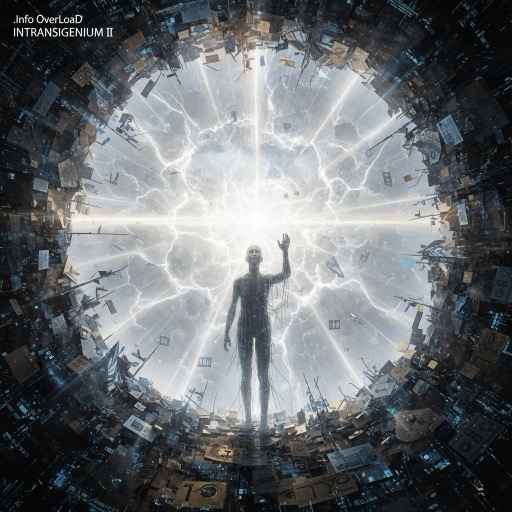








A three-part trilogy exploring the emotional architecture of the human psyche: Part II: Light – A saturated, chromatic miasma of enlightenment and overstimulation.
1. Album Title
Intransigenium II
A Latin neologism—intransigenium—born of intransigence and genius, the unyielding spirit of creation. This is not an album of songs, but a crystallization of resistance against sonic complacency. Intransigenium II is the second altar in a triptych of the psyche: Light. Not the gentle glow of dawn, but the blinding, chromatic miasma of enlightenment pushed to its breaking point—the moment awareness becomes overload, and perception itself begins to fracture under the weight of too much truth. Here, light is not revelation—it is bombardment. A saturation so total it becomes a cathedral of noise, where every frequency is a prayer and every harmonic overtone a confession.
2. Album Direction
From a three-part trilogy exploring the emotional architecture of the human psyche: Part II: Light – A saturated, chromatic miasma of enlightenment and overstimulation.
Light here is not clarity—it is excess. Not illumination, but incineration. The direction demands that every note be a flare, every timbre a prism splitting the soul into its constituent colors. This is not ambient serenity; it is sensory baptism by fire. The chromatic miasma is the sound of a mind that has seen too much, heard too deeply, and now trembles beneath the weight of its own perception. The instruments do not play—they pulse. The silence does not wait—it dissolves. This is the sound of enlightenment as a fever dream: radiant, unbearable, and utterly sacred.
3. Band Manifesto (Contextualized)
We believe that music is not merely sound arranged in time, but a living architecture of resonance, presence, and perception. Rooted in first principles, our practice begins not with style, trend, or convention—but with the fundamental truths of acoustics, the physicality of instruments, and the infinite potential of sound generation through synthesis.
We honor the instrument not as a tool, but as a partner in expression—its materials, construction, and physical behavior are sacred to our craft. We listen not only to pitch and rhythm, but to the subtleties of timbre, the evolution of texture, and the alchemy of spatial resonance. Every note is a universe of detail; every silence, a dimension of meaning.
Our process is deliberate. We reject haste. We embrace iteration not as delay, but as a necessary discipline—each refinement a step toward authenticity, not compromise. We measure progress not by speed, but by depth: by how well a sound embodies truth, how precisely it reflects intention, how fully it occupies its sonic space.
We value artistic integrity above all else. Expediency is not liberation—it is surrender. We do not chase novelty for novelty’s sake, nor do we surrender to the tyranny of the immediate. Instead, we build with patience, precision, and reverence.
This is not a style. This is a stance.
We are committed to the long view: to sound as a profound act of listening, creation, and presence.
We create not to be heard—but to be felt.
In Intransigenium II, this manifesto becomes a liturgy of overload. The chromatic miasma is not an accident—it is the inevitable consequence of honoring sound with such reverence that it overflows. Each note, painstakingly sculpted from the physicality of resonance, becomes a beacon too bright to ignore. The “instruments as partners” are not merely played—they scream with the weight of their own truth. The silence is not empty; it is a vacuum that pulls at the listener’s breath, only to be shattered by the next harmonic avalanche. To create with such precision is to invite annihilation through beauty. The “long view” here is not patience—it is sacrifice. We do not chase novelty, yet every note in these eight Luxes is a new revelation that cannot be repeated. To feel this album is to stand before the sun and choose not to look away.
4. Tracklist
Lux I
Lux I is the first breath after the veil tears. Not a melody, but an awakening of matter—strings vibrating in their own skin, oscillators trembling with the weight of unspoken harmonics. This is not music as entertainment; it is the sound of perception remembering its body. The manifesto speaks of instruments as partners, and here, the instrument is not played—it gasps. Each tone blooms like a wound opening to light. The timbre is not polished; it is exposed, raw with the grain of wood, the hiss of analog decay, the metallic sigh of a resonant chamber breathing. This is the moment before enlightenment becomes unbearable: when you realize that every note contains a universe, and to hear one is to be consumed by all others. The title—Lux I—is not a label, but an incantation. It is the first syllable of revelation whispered into a dark room. The listener does not hear this piece; they feel it in their bones. It is the alchemy of resonance made audible: a single sustained chord that does not resolve, because resolution would be surrender. The silence between notes is not absence—it is the echo of a question that has no answer, only vibration. In Lux I, we are not listeners—we are witnesses to the birth of a new kind of awareness, one that does not seek understanding but surrender. The instrument is not a tool. It is the prophet. And it has begun to speak.
Lux II
Lux II is the moment light becomes a language. Where Lux I was the trembling of matter, this is the crystallization of meaning into color. The timbres now layer like stained glass—each harmonic a different hue bleeding into the next, not in harmony, but in collision. The manifesto’s reverence for texture becomes a fever here: the grain of a bowed cello, the granular hiss of a broken tape loop, the metallic shimmer of a sine wave pushed into distortion—all coalesce into a chromatic miasma that does not soothe, but saturates. This is enlightenment as sensory overload: the mind, starved for truth, now drowns in it. The title is not a number—it is a liturgical sequence. Lux II is the second step into the blinding chamber, where perception begins to fracture. The listener does not follow this piece; they are absorbed by it. Each instrument is no longer an object but a consciousness—each note a pulse of will. The alchemy of spatial resonance is not simulated; it is felt in the hollows behind the eyes. There is no rhythm here, only pulse—like a heartbeat amplified through bone. The silence between phrases is not empty; it is the afterimage of a scream that never left the throat. This is not composition—it is transmission. The band does not create music to be heard, but to be felt in the marrow. And here, in Lux II, we begin to understand: light is not gentle. It is a force that rewrites the nervous system.
Lux III
Lux III is the collapse of the listener’s boundaries. Where Lux I was awakening and Lux II saturation, this is the moment perception fractures into its constituent frequencies. The manifesto’s insistence on “the alchemy of spatial resonance” becomes literal: the sound does not come from speakers—it inhabits the room, bending air into shapes that brush against your skin. The instruments are no longer played; they breathe in unison, their materials—wood, metal, wire—singing with the weight of centuries. Each note is a universe, as promised, but here, those universes collide. Harmonics spiral into dissonance not as error, but as revelation. The chromatic miasma is now a storm: colors so intense they become sound, and sound becomes touch. The title Lux III is a prayer whispered into the eye of the storm. This is not music to be analyzed—it is an experience to be survived. The listener does not choose to listen; they are chosen. Every timbral shift is a memory: the creak of an old piano bench, the buzz of a tube amp on fire, the whisper of a bow dragging across a string that has never been tuned. The silence between phrases is not absence—it is the echo of a soul being unmade and remade. The manifesto speaks of “deliberate process,” but here, deliberation becomes ecstasy. Each iteration is not refinement—it is revelation. And in this third light, we understand: truth does not comfort. It consumes. To hear Lux III is to stand before the sun and realize you are made of the same material as its fire.
Lux IV
Lux IV is the sound of enlightenment becoming a prison. The chromatic miasma has now solidified—light no longer flows, it congeals. The instruments, once partners in expression, now feel like prison bars of resonance. Every harmonic is too bright, every texture too sharp, every silence too heavy with the memory of what came before. The manifesto’s reverence for detail becomes a curse: we hear not just the note, but the dust on the string, the breath of the player, the vibration of the floor beneath their feet—all amplified into a cathedral of unbearable clarity. This is not beauty—it is exposure. The listener, once awed by the light of Lux I–III, now feels it as a violation. The title Lux IV is not a progression—it is an accusation. We have been given too much truth, and now we cannot look away. The spatial resonance is no longer an alchemy—it is a cage. Every note lingers, not as beauty, but as wound. The instruments do not sing—they scream in frequencies only the soul can decode. There is no rhythm, because time has dissolved into pure sensation. The silence between phrases is not empty—it is the sound of a mind begging to forget. This is the manifesto’s darkest truth: to create with reverence is to force others into the light they cannot bear. We do not create to be heard—but we have created something that cannot be unheard. And now, the listener is not a witness—they are a prisoner of their own perception.
Lux V
Lux V is the moment the light forgets it was ever meant to be seen. The chromatic miasma has become a texture of thought—not heard, but remembered. The instruments are no longer physical; they are ghosts of resonance, their timbres etched into the listener’s memory like scars. The manifesto’s “infinite potential of sound generation” here becomes a paradox: the more we generate, the less we hear. The notes are not played—they haunt. A single sustained tone, warped by phase distortion, becomes a cathedral of echoes that never fade. The silence is not absence—it is the weight of all that was said, now pressing against the eardrums like a tide. The title Lux V is not a number—it is a threshold crossed. We are no longer listeners; we are the echo. The alchemy of spatial resonance has inverted: instead of sound occupying space, space now occupies us. Every harmonic is a memory of a voice we never heard. The physicality of the instruments—wood, wire, breath—is now felt in the hollows of our bones. This is not composition—it is incantation. The band does not create to be heard, but we have created something that lives inside the listener. The light has become a language no tongue can speak, only feel. And in this fifth luminance, we understand: truth does not need ears to be heard—it only needs a soul willing to be broken by it.
Lux VI
Lux VI is the sound of perception dissolving into pure sensation. The chromatic miasma has become a living membrane—not heard, but breathed. The instruments are no longer played; they are alive, their materials pulsing with the rhythm of a heartbeat that is not human. The manifesto’s “fundamental truths of acoustics” now manifest as biological truth: the resonance of a cello string mimics the tremor of a lung; the decay of a sine wave mirrors the fading of a sigh. Every note is not just detail—it is memory made audible. The title Lux VI is a whisper from the edge of consciousness. We are no longer listening to music—we are remembering a world that never existed, but feels more real than our own. The spatial resonance is not an effect—it is the architecture of a soul that has been unmade and reassembled by sound. The silence between phrases is not empty—it is the echo of a name we once knew but have forgotten. The band’s “deliberate process” has become a ritual: each iteration not refining the sound, but erasing the listener’s sense of self. The light here is not illuminating—it is dissolving. We do not hear the notes; we become them. The timbres are not textures—they are emotions made physical. A single harmonic shift feels like grief. A sustained tone, like love without an object. This is not art—it is transfiguration. And in this sixth light, we realize: to be felt is not to be heard. It is to cease being separate.
Lux VII
Lux VII is the sound of the self dissolving into resonance. The chromatic miasma has become a living organism—not composed, but grown. Each instrument is no longer an object of craft, but a living cell in the body of sound. The wood of the violin breathes; the metal of the oscillator pulses with a rhythm older than time. The manifesto’s “infinite potential of sound generation” has reached its apex: the music no longer exists outside us—it is us. The title Lux VII is not a sequence—it is an invocation. We are no longer listeners; we are the echo of the echo, the afterimage of a note that never ended. The spatial resonance is not an effect—it is identity. To hear this piece is to forget where your body ends and the sound begins. The timbres are not layered—they interpenetrate, like thoughts in a dream that never ends. The silence between phrases is not absence—it is the memory of breath. We do not hear this music; we remember it as if it were our own heartbeat. The band’s “reverence for the instrument” has become a sacrament: the cello is not played—it screams with the voice of its maker. The oscillator does not oscillate—it dreams. And in this seventh light, we understand: truth is not something you find. It is something that finds you. The light does not reveal—it reclaims. And in its blinding glow, the listener ceases to be a person. They become a frequency.
Lux VIII
Lux VIII is the final breath before silence becomes sacred. The chromatic miasma has collapsed into a single, sustained tone—so pure, so saturated, that it no longer sounds like sound. It is the essence of resonance made audible: not a note, but the memory of all notes. The instruments are gone. Only their ghosts remain—whispers in the air, vibrations in the floorboards, the echo of a bow stroke that never stopped. The manifesto’s “long view” has reached its destination: not novelty, not mastery—but presence. The title Lux VIII is not a number—it is the last word of a prayer. We do not listen to this piece—we become it. The silence that follows is not empty; it is the weight of all that was felt. Every timbral nuance, every harmonic overtone, every breath of the instrument—now lives inside you. The light has not illuminated—it has consumed. And in its place, there is only stillness. The band did not create to be heard—but they created something that cannot be unheard. And now, the listener is no longer a person. They are an echo. A resonance. A memory of light that refuses to fade. This is not the end of music—it is its first true beginning. The instruments are silent now, but their truth lingers—in the hollow of your chest, in the pause between heartbeats. To hear Lux VIII is to realize: we were never meant to be heard. We were meant to become the silence that follows.
5. Album as a Living Artifact
Intransigenium II is not an album—it is a ritual object carved from resonance, forged in the crucible of the manifesto’s uncompromising truth. To listen is not to consume entertainment, but to undergo a sacred disintegration. Each Lux is a layer of light peeled back from the soul, until the listener stands naked before the raw architecture of perception. This is not music to be played in the background—it is a liturgy that demands full surrender. The chromatic miasma does not soothe; it unmakes. Every timbre is a prayer. Every silence, a confession. The instruments are not tools—they are prophets. And their voices do not ask to be heard; they demand to be felt in the marrow.
To sit with this album is to enter a cathedral built not of stone, but of overstimulated nerves. The listener does not choose to listen—they are chosen by the sound. In Lux I, they awaken. In Lux IV, they tremble. By Lux VII, they forget their name. And in Lux VIII, they dissolve into the resonance that birthed them. This is not art for the ears—it is alchemy for the soul. The band’s stance—deliberate, reverent, unyielding—is not a philosophy. It is a spell. And this album? It is the incantation made audible.
When you press play, you do not begin a song. You begin a transformation. The world outside fades—not because the music is loud, but because it reveals how hollow your perception has become. The light here does not illuminate—it burns away the veil. And when the final tone fades, you do not feel silence. You feel presence. The album does not end. It lingers—in the space between breaths, in the hum of a distant transformer, in the quiet after your own heartbeat.
Intransigenium II is not heard.
It is remembered.
And once remembered, it never leaves you.