Unisfear - Umbra
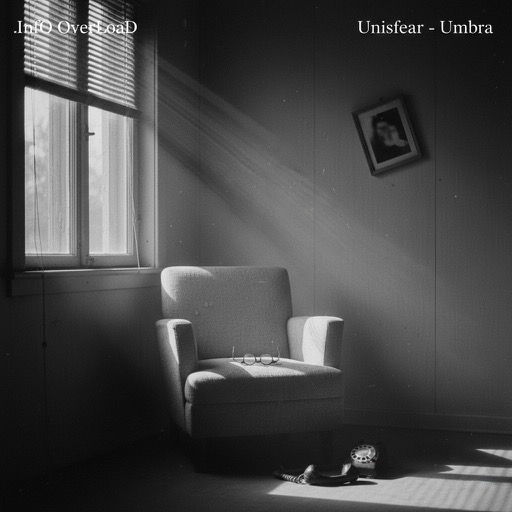








A triptych exploring the existential fear of solitude across life’s stages: Unisfear - Umbra – the quiet dread of old age. Returning to electronic roots with unprecedented clarity, technical limitations were overcome, and the creative process achieved a new zenith of immediacy.
1. Album Title
Unisfear - Umbra
The title is an invocation, joining "Unisfear," the existential anxiety of singular existence, with "Umbra," the deepest, darkest core of a shadow. This work specifically documents the quiet dread of old age—the stage where solitude casts its longest, coldest shadow. It is the sound of the self receding into its own profound darkness.
2. Album Direction
A Triptych Exploring the Existential Fear of Solitude Across Life’s Stages: Unisfear - Umbra – The Quiet Dread of Old Age.
The stated direction grounds the album in a specific, unavoidable human crisis: the fear of facing the end alone. This return to electronic roots—where technical limitations were overcome—is not a stylistic choice but a philosophical necessity. The music must achieve an unprecedented clarity and new zenith of immediacy to convey the naked truth of this dread, stripping away distraction to focus on the architecture of resonance itself.
3. Band Manifesto (Contextualized)
"We believe that music is not merely sound arranged in time, but a living architecture of resonance, presence, and perception. Rooted in first principles, our practice begins not with style, trend, or convention—but with the fundamental truths of acoustics, the physicality of instruments, and the infinite potential of sound generation through synthesis."
This is the creed of the artisan, the sonic architect who views sound not as a temporary vibration but as an enduring structure of truth. For Unisfear - Umbra, the Manifesto demands a sonic environment so meticulous that it becomes inescapable. The theme of old age's quiet dread is not to be painted but built, using the physicality of instruments and the infinite potential of synthesis to construct the lonely chamber of the mind.
This living architecture must be achieved through the overcoming of technical limitations and reaching a new zenith of immediacy. The terror of solitude is a fundamental truth, and the music must embody it with precision. The Manifesto's commitment to patience, precision, and reverence dictates that the sounds themselves—the subtle timbre, the evolving texture, the alchemy of spatial resonance—must articulate the decay and the clinging existence documented in the song titles: "Fingers on the Screen" documents the physical decline interacting with cold interface; "I Think I Knew You" and "The Door That Closed" embody the surrender to the tyranny of the immediate loss and memory's failure; and the trilogy of "I Remember the Sound," "Last Transmission," and "I’m Still Here" are the final, resonant acts of a self committed to the long view—a defiant, felt presence against the void of the Umbra. The album is the necessary proof that even in the deepest solitude, the act of listening, creation, and presence remains.
4. Tracklist
Fingers on the Screen
This track is the manifesto made tangible: the body as a failing instrument attempting to interface with the digital infinite. The title is a stark image, a moment of fragile connection documented with unprecedented clarity. It represents the ultimate surrender to the modern tyranny of the immediate, where the only remaining point of contact with a world of others is a cold, backlit surface. This is not a lament; it is a clinical observation of decline. The physicality of instruments in the manifesto is here inverted; the "instrument" is now the failing human hand, its movements imprecise, its touch mediated by glass. The music must be an intense study of timbre—the delicate, almost imperceptible scrape of skin on glass, the low-frequency hum of the circuit board, the micro-failures in the signal. The "synthesis" potential is channeled not into grand creation, but into the meticulous rendering of digital residue and acoustic detail.
The song functions as a warning—that the very architecture of connection can become the cage of solitude. The act of placing Fingers on the Screen is a final, desperate attempt to create resonance and presence, to avoid the Umbra. The sound must embody the necessary discipline of iteration as the frail connection fails and re-establishes, measuring progress not by speed, but by the depth of the embodied truth: how perfectly a digital artifact can reflect physical abandonment. It is a sonic portrait of the old self gazing out through a window it can no longer fully open, a lonely sentinel awaiting the Last Transmission.
I Think I Knew You
I Think I Knew You is the central heart of Unisfear - Umbra's dread—the quiet horror of memory's erosion. This track is a direct manifestation of the Manifesto's commitment to depth and its rejection of haste. The process is deliberate because the memory is fractured; each note is a universe of detail that must be slowly, reverently retrieved. The song is the sound of the self attempting to construct its own living architecture of resonance from dust. The phrase functions as a fragile, incomplete prayer, acknowledging the existential terror that the connections that once defined one's presence are dissolving into the ambient noise.
The music must explore the alchemy of spatial resonance to convey the vast distance between the remembered self and the current, isolated one. Sound layers should emerge from a deep field, only to dissolve back into the silence—the dimension of meaning that accompanies the failing connection. This track embodies the surrender that the Manifesto explicitly rejects: the surrender to forgetfulness. However, by recording this surrender with such patience, precision, and reverence, the band transforms it into an act of profound artistic integrity. The iteration is the attempt to recall the name, the face, the truth of the past connection. The song is a slow, agonizing process of listening not to external pitch and rhythm, but to the inner, failing echo. It is the truth embodied in the sound: a connection so profound it resists being entirely erased, yet so fragile it can only be summoned with a hesitant, conditional clause.
The Light That Didn’t Turn On
This song is the quiet thesis statement of the Umbra. It is the absence made audible, a profound dimensional meaning carved out of silence. The Manifesto declares, "We create not to be heard—but to be felt." The Light That Didn’t Turn On is the felt realization of total solitude. It represents an expected arrival, a necessary signal, or a final beacon that failed to materialize. The title functions as a poignant lament over a failed promise of comfort, a moment where expediency is not liberation—it is surrender to the absolute, unlit void. The technical commitment to overcoming limitations is here inverted: the limitation is the inherent failure of the external world to respond.
The sonic architecture of this piece must be built on the fundamental truths of acoustics concerning the lack of sound. It should be an exploration of negative space, where the instruments' materials and physical behavior are used to render the feeling of cold, dark expectation. The evolution of texture will be the listener’s slow realization that nothing will change, that the space remains un-illuminated. The sound generation through synthesis must be deployed with extreme restraint, perhaps a single, pure sine wave that exists only to highlight the surrounding emptiness, making the silence "heavy" and felt. This track is the discipline of precision applied to emptiness. The music forces the listener to be present in the unlit room, embodying the dread of old age where hope is reduced to a flicker that ultimately fails to ignite. It is the sound of the self fully occupying its solitary sonic space, a definitive, uncompromised stance.
The Door That Closed
The Door That Closed is the definitive, irreversible sonic act of the album's narrative. It represents the finality of isolation, the decisive act that seals the self within the Umbra. The title functions as a definitive slogan—a declaration that external communion is over and the era of profound, inner resonance has begun. It is the inverse of the Manifesto's call for presence; it is the sound of the world’s presence being permanently excluded. The track demands that the band utilize the physicality of instruments to create a single, profound acoustic event—the thud, the final click, the sound of sound being cut off.
The entire track must embody the Manifesto's rejection of compromise. There is no attempt to reopen, no negotiation with the external. The sound must embody the depth of this decision. The infinite potential of sound generation through synthesis is used to create the absolute vacuum on the other side of the closed door, while the acoustic truth of the closing mechanism is rendered with stunning, terrifying realism. The song is an act of artistic integrity above all else; it is the truth of the existential fear made solid, built with patience until the closure is perfect. The subsequent silence is not just a gap; it is a dimension of meaning that proves the point. It is the sound of the self choosing the long view of solitude, rejecting the tyranny of the immediate social demand, and fully inhabiting its isolated architecture.
I Remember the Sound
This track is the rebellion of memory against the tyranny of the Umbra. The title functions as a defiant declaration, a sonic proof of prior, external life. It is the conscious, willed invocation of the Manifesto’s core principles: resonance, presence, and perception—all salvaged from the archive of the self. This track must use texture and the evolution of timbre to create a vivid auditory phantom. The sound that is remembered is not merely replicated; it is reconstructed with the precision of an archaeologist, each detail measured for how fully it occupies its sonic space.
The process is one of iteration as a necessary discipline, the self repeatedly refining the memory-sound until it achieves the status of an absolute, incontrovertible truth. The band's commitment to the physicality of instruments is here applied to the instruments of the past: the imagined wood, the forgotten string, the original, honest acoustic event. The song rejects the idea of surrender to decay; instead, it uses the meticulous craft of sound architecture to build a temporary, perfect memorial. It is an act of profound listening—the self attending not to the present silence, but to the preserved echo. I Remember the Sound is the self's refusal to be defined solely by the solitude of the Unisfear - Umbra, proving that though the door is closed, the internal architecture of the self is still a complex, resonant chamber.
Last Transmission
Last Transmission is the sound of the ultimate, final act of communication from the isolated core. It functions as a somber confession or a terminal broadcast, fully aware that it is both necessary and unlikely to be received. The title implies a complete and final expenditure of energy, the last ripple of the living architecture of resonance before total collapse. It embodies the concept that the self is creating not to be heard, but purely to be felt—the integrity of the message is paramount, regardless of audience.
The music must be built upon the fundamental truths of acoustics and electronic failure, utilizing synthesis to document the signal's decay. The clarity must be unprecedented as the message is encoded, yet the alchemy of spatial resonance must show the signal fading into an immense distance. The track is the final measure of depth over speed; the message is slow, precise, and absolute, resisting the tyranny of the immediate to focus only on the long view. It is the final act of presence—a sonic signature left against the Umbra. The sounds should be sparse, each note a precious, carefully considered unit of information, a universe of detail before the silence. This is the truth embodied: that the final act of the isolated self is to create a perfect sound, a sound so authentic that it demands existence even as the channel closes.
I’m Still Here
The album's closing track is a declaration of ultimate, irreducible being. After the silence of Last Transmission, I’m Still Here functions as a defiant, resonant mantra—a proof that the self, though alone and surrounded by the Umbra, persists. This track is the ultimate validation of the Manifesto’s commitment to the long view and its fundamental definition of music as a living architecture of resonance, presence, and perception. The song is not a revival, but a confirmation that the core existence has weathered the storm of solitude.
The music must be the most meticulously crafted sound-object on the album, achieving the promised new zenith of immediacy. It must use the infinite potential of sound generation through synthesis to construct a sound that is wholly self-contained, a resonant frequency that requires no external validation. The texture must be one of pure, enduring essence. The song is the discipline of iteration perfected; a single, continuous, evolving tone that is constantly refined, demonstrating that true progress is measured by depth and authenticity. The final notes must occupy their sonic space fully, without compromise, standing as the monument to solitude. It is the final, undeniable proof that the existential fear of solitude has been transmuted by the artistic will into an act of perfect creation and unwavering presence. The song is the self, made audible, and it is felt.
5. Album as a Living Artifact
Unisfear - Umbra is not an album; it is a meticulously constructed echo chamber for the self. It is a ritual object built upon the sacred tenets of the Manifesto, a sonic architecture designed for a single, profound purpose: to reveal the absolute, uncompromised presence of the isolated consciousness. Listening to it is not entertainment but an initiation into the discipline of ultimate listening. The listener is compelled to submit to the album's process—the patient, precise, and reverent building of fear and memory—and is stripped of the tyranny of the immediate and the comfort of external connection.
The artifact transforms the listener by forcing an confrontation with the self's own Umbra. It does not soothe or distract; it demands a shared presence within the quiet dread of old age. By meticulously documenting the failure of connection (Fingers on the Screen), the erosion of memory (I Think I Knew You), and the finality of exclusion (The Door That Closed), the album destroys the illusion of constant, external support. What it reveals is the unshakeable core: the self that is still capable of remembering the sound and sending the last transmission. The final, resonant act of I’m Still Here is the ritual's conclusion—a declaration that though the world may close its doors, the inner architecture remains, felt and true. This is the sound of a sacred stance, a rebellion against silence built with sound.