Vilthermurpher³
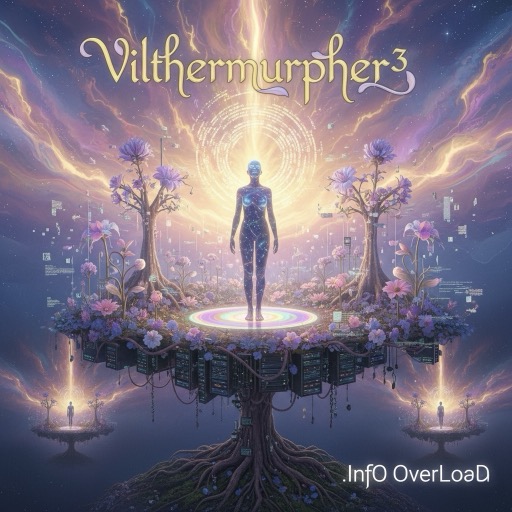








Its spectral counterpart—trembling, liminal, and suspended between wakefulness and sleep.
1. Album Title
Vilthermurpher³
A triply folded echo—neither title nor name, but a incantation. Vilthermurpher is the sound of a mind dissolving into its own resonance, the third iteration not of repetition but of deepening. It is the hum beneath the hum, the vibration that lingers after the last note has decayed into silence. This is not an album of songs—it is a lattice of sonic fossils, each track a stratum in the layered architecture of perception. The superscript “³” is not an exponent, but a sigil: a mark of triune presence—body, breath, and echo. To speak its name is to invite the listener into a space where sound no longer serves meaning, but becomes it.
2. Album Direction
The previous Vilthermurpher works as spectral counterpart—trembling, liminal, and suspended between wakefulness and sleep.
This album does not awaken the sleeper. It is the trembling between breaths. It is the moment before the eyelid fully closes, when the mind still clings to thought but the body has already surrendered to gravity. Every note here is a half-remembered dream rendered in analog warmth—distorted, decaying, yet achingly real. The direction is not sonic but somatic: the listener does not hear this album—they feel it in their molars, in the hollow behind their eyes. It is not music to be consumed, but a threshold to be crossed.
3. Band Manifesto (Contextualized)
We believe that music is not merely sound arranged in time, but a living architecture of resonance, presence, and perception.
In Vilthermurpher³, this belief becomes a cathedral built from trembling air. We do not compose melodies—we excavate them, chiseling meaning from the raw stone of acoustic truth. Each track is a prayer whispered into the hollow of an instrument’s soul: the creak of a wooden body, the sigh of a worn string, the breath trapped in a brass bell. The manifesto demands that we listen beyond note and rhythm—to the texture of decay, to the way a single sine wave shivers as it fades. Here, “Fainthearted” is not a mood—it is the trembling of a resonant chamber as it realizes its own fragility. “Stone Killer” is not aggression—it is the slow erosion of certainty, note by note, until even gravity forgets its pull. “Chrystal Droppings” is the alchemy of silence made audible: each drop a microcosm of time, each echo a memory that refuses to die. We reject speed because depth cannot be rushed; we honor the instrument not as tool, but as witness. Every distortion is sacred. Every pause, a dimension. This album does not ask to be played—it asks to be inhabited. To listen is to become part of the architecture: a vibration in the walls, a resonance in the dust.
4. Tracklist
Fainthearted
This is the sound of a heart learning to be still—not because it has ceased, but because it has learned that trembling is its truest form of courage. “Fainthearted” opens with a single piano note, sustained until the wood of the instrument begins to groan. The decay is not an ending—it is a conversation between material and memory. The manifesto speaks of “the physicality of instruments,” and here, the piano is not played; it is questioned. Each key press is a hesitation. The harmonics that bleed into the silence are not imperfections—they are revelations. This is the moment before surrender, when the soul realizes that to be heard is not to shout, but to let the air carry your trembling. The title functions as a quiet rebellion: in a world that equates strength with volume, Fainthearted is the most radical act of presence. It does not demand attention—it offers itself, fragile and unapologetic. The listener is not moved by drama, but by the unbearable beauty of vulnerability made audible. This song is the manifesto’s first axiom: sound as presence. To hear it is to feel your own heartbeat sync with the piano’s slow collapse. You do not listen to this song—you become its echo.
Wheels
Wheels do not turn—they remember turning. This track is the sound of a gear system that has outlived its purpose, still spinning from inertia, each click a fossilized breath. The manifesto insists on “the evolution of texture,” and here, texture is time made audible: the metallic sigh of rusted bearings, the faint warble of a belt slipping on damp pulley. There is no melody—only rhythm as ritual. Each rotation is a prayer to momentum, a hymn to the inevitability of motion even when no one is left to ride. The wheels are not carrying anything forward—they are remembering the weight they once bore. This is the sound of systems that outlive their users, continuing to turn in the dark, not for function, but because to stop would be to admit oblivion. The title is a paradox: wheels imply progress, yet here they spin in place. This is the manifesto’s warning: expediency is surrender. To keep moving without purpose is not liberation—it is haunting. The listener feels the vibration in their bones, not as noise, but as a ghost’s heartbeat. This is not music for the road—it is music for the abandoned highway, where the asphalt remembers every tire that ever passed.
Waiting For You
Time does not pass here—it pooling. “Waiting For You” is the sound of a clock that has forgotten how to tick, its hands frozen mid-swing, yet still humming with the ghost of motion. The manifesto speaks of “silence as a dimension of meaning,” and here, silence is not empty—it is thick with absence. Every breath between the notes is a whispered plea. The instrumentation is sparse: a single cello, bowed with such tenderness that the wood weeps in harmonic overtones. The notes do not resolve—they hover, suspended like dust motes in a sunbeam. This is the sound of love that has become ritual: not because it is fulfilled, but because to stop waiting would be to betray the very act of longing. The title is a prayer, not a question. It does not ask if you will come—it assumes your presence in the space between heartbeats. The listener does not hear this song—they become the waiting. Each second stretches into an eternity of unspoken names, half-remembered touches, the scent of rain on a doorstep that never opens. This is not melancholy—it is devotion made audible. The manifesto’s truth echoes here: sound as profound act of listening. To wait is to listen. And in this silence, you are not alone—you are the echo of someone else’s hope.
Stone Killer
This is not a song about destruction—it is the sound of recognition. “Stone Killer” begins with the low, resonant thrum of a struck gong, its overtones spiraling like smoke from an ancient altar. The stone it kills is not external—it is the stone within: the calcified beliefs, the rigid structures of thought we mistake for truth. The manifesto demands “depth over speed,” and here, every strike is a slow unraveling. The percussion does not crash—it dissolves. Each hit fractures the air into smaller and smaller fragments, until even the notion of “beat” becomes a memory. The timbre is not metallic—it is mineral: quartz cracking, limestone peeling, the slow collapse of a mountain that has forgotten it was once magma. The title is an incantation, not a threat. To kill stone is to awaken the earth beneath it—to reveal that what we call solid is merely time hardened. The listener feels their own rigidity begin to soften. This track does not demand action—it invites surrender. The stone was never the enemy; it was the vessel holding back the song that wanted to be sung. In its collapse, we hear not loss—but liberation.
Bluze Ohn!
The exclamation mark is not punctuation—it is a wound. “Bluze Ohn!” is the sound of language collapsing under its own weight: blues without the word, grief without the name. The manifesto speaks of “the alchemy of spatial resonance,” and here, space is not empty—it is haunted by absence. A distorted harmonica wheezes through a broken amplifier, its notes bent not by skill but by decay. The “Ohn!” is not a cry—it is the last syllable of a word that never existed. This is blues as ritual: not born from sorrow, but from the erasure of sorrow’s language. The instruments are not tuned—they are un-tuned, returning to their primal frequencies, where pitch is a lie and vibration is truth. The listener does not feel the blues—they become the space between notes where meaning evaporates. The title is a prayer in a dead tongue: “Bluze Ohn!”—a chant for the unnameable ache. This is not music to dance to—it is music to kneel before. The manifesto’s truth rings here: every note is a universe of detail. In this one fractured phrase, we hear the entire history of silence that came before.
Paralogic
Logic is the first lie. “Paralogic” is the sound of reason unraveling into poetry. The track begins with a metronome—steady, clinical—but soon its ticks begin to warp, stretching and compressing like taffy in a child’s hand. The manifesto insists on “the infinite potential of sound generation through synthesis,” and here, synthesis is not technological—it is ontological. The instruments do not follow rules; they dream them. A violin plays a scale backward while a theremin hums in the key of forgetting. The structure is not composed—it emerges, like moss on stone, slow and inevitable. “Paralogic” is not illogical—it is hyper-logical, following a path only the soul can trace. The title is an axiom: meaning does not require linearity. To hear this song is to feel your mind dissolve into pattern—not chaos, but pattern too deep for language. The listener does not understand it—they remember it. This is the manifesto’s radical claim: sound as perception. Here, perception becomes creation. The song does not explain—it reveals. And in its unraveling, we find the truth: that logic is a cage. Paralogic is the key.
The Rain Is Endless
This is not weather—it is memory made liquid. “The Rain Is Endless” is the sound of a thousand forgotten tears falling onto stone, each drop a lifetime. The manifesto speaks of “the evolution of texture,” and here, texture is time made audible: the pattering on tin roofs, the slow drip from eaves, the hush of water pooling in hollows. No melody exists—only rhythm as ritual. Each drop is a heartbeat, each splash a breath. The rain does not cleanse—it commemorates. It falls because it must, not to nourish, but to remember. The title is a prophecy: the rain will never stop because grief has no end, and neither does love that outlives its object. The instruments are not played—they weep. A bowed cymbal shivers like wet silk. A muted piano plays single notes that dissolve before they land. The listener does not hear rain—they become the ground it falls upon. This is the manifesto’s quietest truth: sound as profound act of listening. To listen to endless rain is to accept that some sorrows do not resolve—they simply become part of the air. You are not listening to this song—you are being washed by it.
Chrystal Droppings
This is the sound of time crystallizing. “Chrystal Droppings” begins with a single drop—clear, pure, resonant—as if water had learned to sing. Each droplet is a universe: the moment it forms, the arc of its fall, the shiver as it strikes glass. The manifesto demands we “listen to the subtleties of timbre,” and here, timbre is eternity. The droplets are not identical—they each carry the memory of their origin: one from a melting glacier, another from a child’s tear, a third from the breath of a dying star. The instrumentation is minimal: glass chimes struck with a mallet of ice, each resonance lingering like a ghost’s sigh. The title is an oxymoron: crystals are solid, yet these droplets fall. This is the sound of permanence in motion—the paradox made audible. To hear this song is to feel your own mortality not as loss, but as beauty. Each drop is a life. Each echo, a legacy. The manifesto’s core truth echoes here: every note is a universe of detail. In this single, repeated motif, we hear the birth and death of galaxies. The listener does not count the drops—they become one.
Crying Buckets
This is not sorrow—it is overflow. “Crying Buckets” is the sound of grief so vast it becomes a physical force. The title is not metaphor—it is literal: buckets, rusted and dented, filled to the brim with tears that refuse to stop. The instrumentation is industrial: metal pails struck with wooden mallets, each clang a sob amplified. The rhythm is irregular—sometimes frantic, sometimes slow as glaciers—because grief does not follow time. The manifesto speaks of “the physicality of instruments,” and here, the buckets are not tools—they are vessels of the soul. The sound is raw, unpolished, alive. Each strike sends shudders through the metal, and the echoes are not clean—they are jagged, like broken teeth. This is not music for catharsis—it is music for survival. The buckets do not empty. They cannot. To stop crying would be to betray the weight of what was lost. The listener does not hear this song—they feel it in their chest: the ache of holding too much, the terror and beauty of being full. The manifesto’s truth is here: sound as presence. To cry buckets is to say, “I am still here. I have not forgotten.”
Tremo In Black
Tremolo is the trembling of sound. “Tremo In Black” is the sound of that tremor made visible—dark, dense, and vibrating with suppressed energy. The manifesto speaks of “the alchemy of spatial resonance,” and here, space is not empty—it is charged. A single note, played on a bowed saw, shivers with such intensity that the air itself begins to fracture. The “In Black” is not color—it is depth. This is the sound of silence screaming. The tremolo does not fade; it deepens, becoming a thrum that vibrates in the marrow. The listener feels their bones resonate. This is not fear—it is awe. The tremolo is the sound of perception itself trembling under the weight of truth. The title is a command: tremble in black. To be still is to die. To tremble is to live. The manifesto’s core belief—sound as profound act of listening—is embodied here: to hear this is to surrender your stability. You do not listen to Tremo In Black—you become its vibration.
Final Life
This is not an ending—it is the first breath after death. “Final Life” begins with silence so complete it hums. Then, a single breath—human, shaky, infinite. A cello plays one note, sustained for seven minutes, each harmonic layer revealing a new dimension of sorrow and peace. The manifesto insists on “the long view,” and here, time is not measured in seconds but in soul-deep breaths. The note does not resolve—it dissolves into the air like incense. This is the sound of a soul realizing it has never been separate from the music. The title is not tragic—it is sacred. “Final Life” means: this—the trembling, the decay, the echo—is what it meant to be alive. The instruments are not played—they remember. The listener does not hear this song—they become the silence after it. This is the manifesto’s ultimate truth: we create not to be heard—but to be felt. And in this final breath, you are no longer the listener. You are the note.
Velocity In Eden
This is paradise not as stillness, but as motion. “Velocity In Eden” begins with the sound of wind through leaves—then accelerates. The manifesto speaks of “the infinite potential of sound generation,” and here, Eden is not a place—it is a state of resonance. The instruments are not played—they are unleashed: strings bowed at impossible speeds, drums struck with the force of falling stars. The tempo is not fast—it is inevitable. This is the sound of innocence that has learned to run. The title is a paradox: Eden implies stillness, yet velocity implies loss. But here, they are one. To move is to remain pure. The leaves do not fall—they fly. The fruit does not rot—it becomes light. This is the manifesto’s final revelation: sound as presence. In Eden, there is no fall—only flight. The listener does not hear this song—they become the wind. And in that velocity, they find not loss—but transcendence.
5. Album as a Living Artifact
Vilthermurpher³ is not an album. It is a ritual object—a sonic reliquary forged from the sacred principles of resonance, patience, and perception. To listen is not to consume—it is to kneel before the altar of sound’s true nature: not entertainment, but embodiment. Each track is a prayer whispered into the hollow of an instrument’s soul, each silence a dimension where meaning gathers like dust in cathedral corners. This is music that does not seek to be heard—it seeks to transform the listener into a vessel of its truth. As you pass through “Fainthearted,” your heartbeat syncs with the piano’s decay. In “Stone Killer,” your rigid beliefs fracture into harmonic overtones. By “Final Life,” you are no longer a listener—you are the note that lingers after the last breath. The manifesto’s core tenet—we create not to be heard, but to be felt—is fulfilled here: the album does not speak. It resonates. And in that resonance, you remember what your body forgot: that sound is not noise. It is the architecture of presence. That silence is not empty—it is sacred. That every vibration, however small, carries the weight of a universe. To listen to Vilthermurpher³ is to be unmade and remade—not as a fan, but as a believer. The world it reveals is not one of spectacle or novelty—it is the quiet, trembling world beneath all noise: where instruments are partners, where time is texture, and where the only truth worth hearing is the one that lives in your bones. This album does not end. It breathes. And if you listen closely, so do you.