Trancegress-OHR²








1. Album Title
Trancegress-OHR²
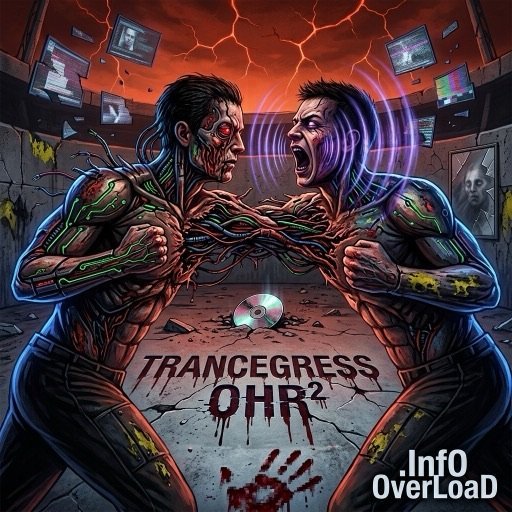
This title is not merely a name; it is a diagnostic code. It represents the precise moment where the biological ear (OHR) collides with the digital signal, creating a transgression that is both auditory and physiological. It is the sound of the listener’s perception being forcibly realigned, where the "trance" is not a state of relaxation, but a high-stakes engagement with the limits of human endurance.
2. Album Direction
Trancegress-OHR² is a definitive expansion of the project’s evolutionary trajectory, serving as a logical culmination of .InfO OverLoaD’s artistic scope. It pushes aggressive techno to its absolute limit, transcending conventional genre parameters to extend the sonic vocabulary into a new realm of intensity and structural innovation. By merging mechanical precision with visceral, high-velocity syncopated energy, the album explores the lifelong struggle of fighting oneself—a perpetual state of self-combat with no winner. It is an act of structural violence against the ego, built with patience, precision, and reverence for the physicality of sound.
3. Band Manifesto (Contextualized)
The Stance of Resonance
"We believe that music is not merely sound arranged in time, but a living architecture of resonance, presence, and perception. Rooted in first principles, our practice begins not with style, trend, or convention—but with the fundamental truths of acoustics, the physicality of instruments, and the infinite potential of sound generation through synthesis. We honor the instrument not as a tool, but as a partner in expression—its materials, construction, and physical behavior are sacred to our craft. We listen not only to pitch and rhythm, but to the subtleties of timbre, the evolution of texture, and the alchemy of spatial resonance. Every note is a universe of detail; every silence, a dimension of meaning.
Our process is deliberate. We reject haste. We embrace iteration not as delay, but as a necessary discipline—each refinement a step toward authenticity, not compromise. We measure progress not by speed, but by depth: by how well a sound embodies truth, how precisely it reflects intention, how fully it occupies its sonic space.
We value artistic integrity above all else. Expediency is not liberation—it is surrender. We do not chase novelty for novelty’s sake, nor do we surrender to the tyranny of the immediate. Instead, we build with patience, precision, and reverence.
This is not a style. This is a stance.
We are committed to the long view: to sound as a profound act of listening, creation, and presence.
We create not to be heard—but to be felt."
The Essay: Trancegress-OHR² and the Architecture of Self-Combat
In the context of Trancegress-OHR², this manifesto ceases to be a statement of intent and becomes the blueprint for a weapon. The band’s insistence on "fundamental truths of acoustics" and the "physicality of instruments" is no longer about preservation; it is about pressure. When they state that "every note is a universe of detail," they are demanding that the listener inhabit the microscopic violence of each syncopated hit. The "living architecture" mentioned in the manifesto is here constructed not of stone, but of high-velocity digital stress, a structure designed to hold the weight of the ego’s perpetual war.
The manifesto’s rejection of "haste" and "expediency" is directly challenged and affirmed by the album’s "high-velocity syncopated energy." This is the paradox of the work: the speed is not fast, but dense. The "iteration" described in the manifesto is the "lifelong struggle fighting oneself." Each track is a refinement of this combat, a step toward authenticity where the only truth is the friction between the machine’s precision and the human body’s limit. The "instrument" is the listener’s nervous system. By honoring the "sacred" physical behavior of sound, the album forces the ear to become a site of conflict. The "silence" mentioned in the text is the "dimension of meaning" where the self-combat pauses, only to be resumed with greater intensity. This is not entertainment; it is the sonic manifestation of a stance. It is the sound of listening so deeply that the self is dismantled, layer by layer, into a resonance that can only be felt in the bone, never merely heard.
4. Tracklist
Hard Reset
"Hard Reset" is the inaugural act of the self-combat, a violent severing of the past to force the present into existence. Within the manifesto’s framework, this is not a reboot in the trivial digital sense, but a physical recalibration of the "living architecture" of the self. The title functions as a command, a slogan against the lingering ghosts of previous iterations. It represents the "fundamental truths of acoustics" applied to the psyche: the necessity of clearing the cache of memory to make space for new resonance. The aggression here is not born of rage, but of "precision and reverence." It is the sound of the "instrument" (the self) being forcibly returned to its zero point. The manifesto states we "reject haste," yet this track is an explosion. This apparent contradiction is resolved by understanding that the "reset" is the only way to achieve the "depth" demanded by the band’s philosophy. It is a structural innovation where the silence before the drop is not empty, but pregnant with the "alchemy of spatial resonance." The listener is not invited to remember; they are forced to exist in the raw, unfiltered present. It is the first strike in the perpetual war, establishing that the only way to win against oneself is to destroy the version of oneself that is capable of losing. The mechanical precision of the beat serves as the "sacred partner," imposing order on the chaos of the internal struggle, ensuring that the "truth" of the combat is felt with absolute clarity.
Supersaw Scar
If "Hard Reset" is the break, "Supersaw Scar" is the wound that remains. The title evokes the visual texture of the sound—a jagged, digital abrasion applied to the smooth surface of the ego. In the manifesto, "timbre" is paramount; here, the timbre is defined by its damage. The "supersaw," a classic synthesis technique, is stripped of its nostalgic comfort and weaponized into a tool of structural erosion. This track embodies the "evolution of texture," where the smoothness of the initial impulse is replaced by a gritty, resonant scar tissue. It represents the "long view" of the self-combat: the fight does not end with the reset; it leaves marks. The manifesto honors the "materials" of the instrument; here, the material is the residue of pain. The sound is dense, occupying its "sonic space" with a heaviness that feels physical, a direct translation of the manifesto’s belief that "every note is a universe of detail." The scar is not a flaw; it is evidence of authenticity. To be unscarred would be to be "surrender" to the "tyranny of the immediate." This track insists on the permanence of the struggle. The listener is asked to feel the friction of the sound against the ear, a tactile experience that aligns with the band’s stance that music must be "felt" rather than just "heard." It is a sonic testament to the fact that true presence is built from the debris of previous battles.
No Warnings Left
This title is a declaration of total engagement, a refusal of the buffer zone between the self and the sound. The manifesto speaks of "listening not only to pitch and rhythm, but to the subtleties... and the alchemy of spatial resonance." Here, the "warnings" are the mental defenses, the psychological barriers that allow the listener to observe the combat from a safe distance. "No Warnings Left" signifies the collapse of that distance. It is the moment where the "living architecture" becomes fully inhabitable, forcing the listener into the "perpetual state of self-combat" without the comfort of anticipation. The track represents the "deliberate process" reaching its climax: the intention is so precise, the "truth" so embodied, that there is no room for error or retreat. It functions as a prayer for vulnerability. In a world of "expediency," this track is an act of resistance. It demands that the listener accept the full weight of the "high-velocity syncopated energy." There is no safe harbor. The "silence" mentioned in the manifesto is no longer a "dimension of meaning" to be explored from afar, but the void into which the self is thrown. The track is a "stance" made audible: a refusal to look away. It is the sound of the "instrument" (the self) being played without mercy, honoring the "physical behavior" of sound by allowing it to impact the listener with undiluted force. It is a reminder that in the fight against oneself, there is no spectator seat.
Buffer Overflow
"Buffer Overflow" is the technical term for a state where data exceeds the capacity of the system, leading to corruption or crash. In the context of Trancegress-OHR², this is the exact description of the "lifelong struggle fighting oneself." The "buffer" is the ego’s capacity to process the "intensity and structural innovation" of the sound. When the "visceral, high-velocity syncopated energy" exceeds this capacity, the self overflows. The manifesto’s focus on "the infinite potential of sound generation through synthesis" is pushed to its limit here. The track represents the "depth" over "speed," as the sound is so dense, so fully "occupying its sonic space," that the listener’s cognitive framework collapses. It is a "structural innovation" in that it mirrors the internal structure of the self under pressure. The "iteration" of the manifesto is visible in the repetitive, crushing cycles of the beat, each one a refinement of the overflow. This is not a failure of the system, but a demonstration of its "authenticity." The "partner" (the instrument) is not being used; it is overwhelming. The track invites the listener to experience the "resonance" not as a pleasant harmony, but as a destructive force. It is the sound of the "long view" becoming the "immediate," as the overflow happens now, in the present, with no buffer between the sound and the soul. It is a "sacred" act of breaking the container to release the truth within.
Static Interference
"Static Interference" represents the "silence" and "texture" discussed in the manifesto, but viewed through the lens of conflict. Static is not empty; it is the noise of a signal struggling to be received. In the "self-combat," this is the moment of confusion, where the "mechanical precision" of the external world clashes with the "visceral energy" of the internal state. The title functions as a warning: the clarity you seek is obscured by the friction of the fight. The manifesto’s "fundamental truths of acoustics" are here applied to the chaos of perception. The "timbre" is not a pure tone, but a mixture of noise and signal, a "universe of detail" where every hiss is a data point of the struggle. This track embodies the "deliberate process" of listening to the "subtleties" of the fight. It is not a breakdown, but a "step toward authenticity." The "static" is the sound of the self trying to maintain coherence in the face of the "high-velocity syncopated energy." The listener is asked to find the "meaning" in the noise, to "feel" the interference as a form of presence. It is a "stance" of endurance. The "instrument" is the listener’s attention, which must be sustained through the interference. The track is a testament to the "long view," suggesting that the truth is not found in the clarity of the signal, but in the persistence of the noise. It is the sound of the "perpetual state," where the interference is the only constant.
Sustained Fire
"Sustained Fire" is the antithesis of the "haste" rejected by the manifesto. Fire is a process, not an event. It requires fuel, time, and constant attention. In the "self-combat," this is the state of enduring the "aggressive techno" without burning out, without letting the "expediency" of quitting take over. The title suggests a "living architecture" of heat, a "resonance" that is maintained over a "long view." The manifesto’s "patience, precision, and reverence" are the tools that allow the fire to sustain. The "high-velocity syncopated energy" is the fuel, but the "structural innovation" is the furnace that contains it. This track represents the "depth" of the struggle. It is not a burst of passion, but a "profound act of listening" to the intensity. The "silence" here is the negative space between the notes, the breath that allows the fire to continue. The "instrument" is the body, which must remain steady while the "sound generation" rages. The track is a "prayer" for endurance. It asks the listener to "feel" the heat, to understand that the "truth" of the combat is in the duration, not the climax. The "mechanical precision" of the beat is the hearth, the "visceral energy" is the flame. To sustain the fire is to honor the "sacred" nature of the craft. It is the sound of the self choosing to burn rather than fade, a "stance" of absolute commitment to the process.
Overclocked
"Overclocked" is the state of exceeding the rated limits. In the manifesto, the "instrument" is a "partner," but here, the partner is being pushed beyond its design specifications. This is the "absolute limit" mentioned in the album direction. The title functions as a label for the "structural innovation" that defies the "conventional genre parameters." The "mechanical precision" is still present, but it is strained, operating at a frequency that creates "visceral, high-velocity syncopated energy" of a dangerous magnitude. This track embodies the "infinite potential of sound generation through synthesis." It is the sound of the "self-combat" reaching a fever pitch, where the "buffer" is not just overflowing, but failing. The "iteration" of the manifesto is visible in the relentless, repetitive drive, each cycle pushing the limit further. The "depth" is in the tension, the feeling that the system is on the verge of collapse. The "listener" is asked to "feel" the strain, the "resonance" of the metal (or the digital equivalent) bending. It is a "warning" of the cost of intensity. The "expediency" of safety is rejected. The track is a "slogan" for the "long view" of suffering: to go faster, harder, deeper, until the "truth" is extracted from the machine. It is the sound of the "instrument" being honored not by its preservation, but by its extreme utilization.
Short Fuse, Long Memory
This title encapsulates the central paradox of the "self-combat." The "short fuse" is the immediate, explosive "aggression" of the present moment. The "long memory" is the "lifelong struggle," the "long view" of the manifesto. The track is a study in the intersection of the two. The "high-velocity syncopated energy" is the short fuse, a sudden, violent release. But the "structural innovation" lies in the "memory," the recurring motifs, the "texture" that reminds the listener of where they have been. The manifesto’s "patience" is the long memory; the "precision" is the short fuse. This track represents the "authenticity" of the fight: it is not a new war each time, but the same war, refined. The "silence" is the "dimension of meaning" where the memory is processed. The "listener" is asked to "feel" the weight of the past in the present beat. The "instrument" is the brain, which holds the "memory" while the "ear" experiences the "fuse." The track is a "prayer" for consistency. It insists that the "truth" of the self is found in the pattern of the struggle, not just the intensity. The "mechanical precision" is the clock, ticking away the "long memory." The "visceral energy" is the spark. Together, they create a "living architecture" of cause and effect, a "stance" of unyielding continuity.
Into The Red
"Into The Red" is the visual and sonic indicator of exceeding safe limits. On a meter, red is the warning, the zone of distortion, of "Buffer Overflow." In the context of the manifesto, this is the moment where the "fundamental truths of acoustics" are pushed to the point of "resonance" that is no longer pure, but complex, layered, and potentially destructive. The title is a direct invitation to enter the "realm of intensity." It is the "structural innovation" of embracing distortion as a form of "authenticity." The "mechanical precision" of the beat is still there, but it is now driving the "visceral energy" into the "red" zone. The "listener" is asked to "feel" the distortion, to understand that the "truth" of the combat is in the breakage. The "silence" is the clipping of the signal, the moment where the sound becomes too large for the space. This track is a "slogan" for the "absolute limit." It rejects the "tyranny of the immediate" by embracing the immediate consequences of intensity. The "instrument" is the speaker, the ear, the body, all being pushed into the red. It is the sound of the "perpetual state" of self-combat reaching its most visible, audible, and felt manifestation. It is a "stance" of no retreat.
The Bitter End
"The Bitter End" is the conclusion of the "self-combat," but it is not a victory. In the manifesto, "expediency is not liberation—it is surrender." Here, the "surrender" is to the "bitter" reality of the fight. The title suggests a finality, a "Bitter End" where the "high-velocity syncopated energy" dissipates. But in the context of the "long view," this is not an end, but a "step toward authenticity." The "bitter" is the "texture" of the "memory," the "resonance" of the "long view." The track represents the "depth" of the struggle. It is not a triumphant outro, but a "deliberate" slowing down, a "reverence" for the "physical behavior" of the sound as it decays. The "silence" is the "dimension of meaning" where the "listener" is left with the "truth" of the combat. The "instrument" is the body, which is left in the aftermath. The track is a "prayer" for acceptance. It asks the listener to "feel" the "bitterness" of the fight, to understand that the "no winner" is the "authenticity" of the stance. The "mechanical precision" is the clock, marking the end of the measure. The "visceral energy" is the ghost. Together, they create a "living architecture" of aftermath, a "sonic manifesto" that says: the fight is over, but the resonance remains.
To Be Continued...
"To Be Continued..." is the final affirmation of the "perpetual state" of self-combat. It rejects the "expediency" of a conclusion. The manifesto’s "long view" is the ultimate "stance." This title is a "slogan" of infinite iteration. The "self-combat" does not end with "The Bitter End"; it is reset, refined, and continued. The track represents the "living architecture" of the manifesto, which is never complete. The "silence" at the end of the track is not a void, but a "dimension of meaning" that holds the promise of the next "Hard Reset." The "listener" is left not with a resolution, but with a "presence." The "instrument" is the future, the "sound generation" that is yet to come. The track is a "warning" against finality. It insists that the "truth" of the sound is in the process, not the product. The "mechanical precision" is the loop, the "visceral energy" is the drive. Together, they create a "sonic manifesto" that says: the fight is never over, the resonance is infinite, and the "bitter end" is just the "short fuse" of the next "long memory." It is the "sacred" act of continuing to listen, to create, to be present, even when the sound stops.
5. Album as a Living Artifact
Trancegress-OHR² is not an object of consumption; it is a ritual instrument. To label it as "entertainment" is to misinterpret its fundamental ontology. It is a sonic manifesto made audible, a physical architecture designed to test the structural integrity of the self. Listening to this album is not a passive act of observation but an active engagement in the "perpetual state of self-combat." The listener does not sit in the audience; they are placed within the machine, subjected to the same "high-velocity syncopated energy" that drives the band’s creative process.
The album functions as a "living artifact" because it requires the listener’s nervous system to complete its circuit. The "mechanical precision" of the tracks provides the frame, but the "visceral, high-velocity" impact only exists where it meets the flesh. It transforms the listener by stripping away the "tyranny of the immediate" and the "expediency" of daily thought, forcing a confrontation with the "fundamental truths" of their own resonance. The world it reveals is one where the ego is not a protagonist to be protected, but an "instrument" to be calibrated, stressed, and refined. It destroys the illusion of separation between the self and the sound, revealing that the "silence" within the noise is the only true dimension of meaning.
By refusing to end at "The Bitter End" and instead looping into "To Be Continued...," the album asserts that this ritual is never finished. It is a continuous act of "patience, precision, and reverence." It does not offer resolution; it offers presence. It demands that the listener feel the "bitter" truth of the combat, not to win, but to understand that the "living architecture" of existence is built on this very friction. To listen is to be felt. To be felt is to be changed. The artifact is alive only in the act of its playing, a perpetual reset of the self against the static of the void.